


(OSM – SMARC – Qseven – SODIMM – SoC SoM – FPGA SoM – SBC – PCIe Cards – VPX Cards – FMC Cards)
What are Embedded Systems?
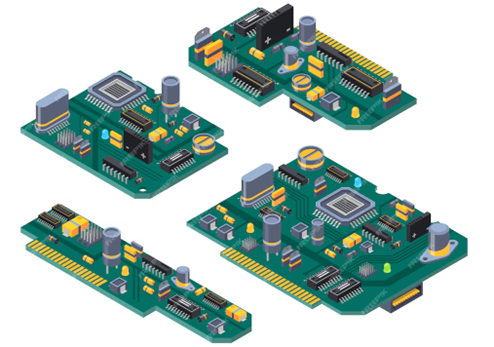
Embedded systems are the combinations of hardware and software designed to perform a specific function. They usually have a processing unit such as a micro-controller, micro-processor, FPGA or DSP. Embedded systems are used in many fields from automobiles to medical devices, or industrial automation systems to consumer electronics.
Features:
They are optimized for a specific task.
They usually require low energy consumption and real-time performance.
Hardware and software are closely integrated.
What is OSM (Open Standard Module)?
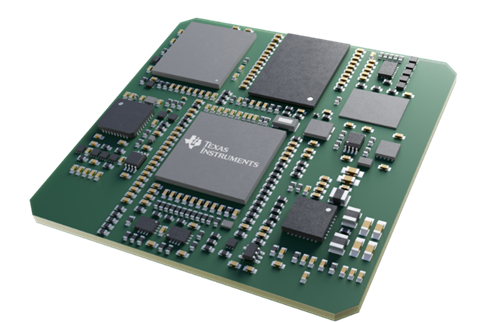
OSM (Open Standard Module) is a compact and flexible module format based on open standards for embedded systems, and is compatible between several manufacturers. The OSM standard aims to provide SOMS (System on Module) in embedded systems with a more compact and standardized structure in terms of installation, integration and size. This standard is mainly used in several fields such as IoT (Internet of Things), industrial automation and portable devices.
Features:
- Sizing Standards:
OSM modules have certain size classes (like Size-0, Size-1, Size-2, etc.), which facilitates both the manufacturing and integration processes. - Assembly by Soldering:
OSM modules are soldered to the motherboard by direct surface mount (SMT) method. This eliminates physical assembly methods such as screwing. - Manufacturer Independence:
Modules from different manufacturers can work on the same motherboard, as they are based on open standards. - Extensibility and Flexibility:
OSM offers a variety of different processor types (like ARM, x86), RAM capacities and peripheral support.
Areas of Application:
• IoT devices
* Industrial control systems
• Medical devices
* Robotic systems
Advantages of OSM:
- Small Size: They offer a compact design to be easily integrated into small devices.
- Ease of Manufacture: With their solderable designs, they provide speed and efficiency during assembly stages.
- Modularity: They allow rapid changes and upgrades in the system design.
- Standardization: They provide a compatible and reliable ecosystem that can be supplied from various manufacturers.
OSM is an ideal option, especially for embedded system developers who are looking for a standardized and scalable solution.
What is SMARC (Smart Mobility ARChitecture)?
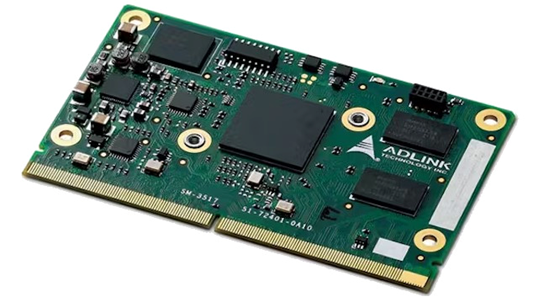
SMARC (Smart Mobility ARChitecture), is a computer module standard designed for portable and embedded devices, with its small size and low power consumption. SMARC standard is particularly optimized for applications that require energy efficiency and high performance, such as IoT (Internet of Things), mobile devices and industrial automation.
Features:
Form Factor:
• SMARC modules have a compact structure. They are usually manufactured in sizes 82 x 50 mm (SMARC 2.0 Size 1) and 82 x 80 mm (Size 2).
• Their small size allows them to be used on devices with limited space.
Low Power Consumption:
• SMARC modules are usually equipped with ARM and x86-based low-power processors to maximize energy saving in mobile applications.
Rich Peripheral Support:
• They offer a wide range of connections, such as Ethernet, HDMI, DisplayPort, LVDS, I2C, SPI, USB and PCIe.
• They are usually optimized for multimedia-intensive applications and sensor connections.
Durability and Reliability:
• SMARC modules can be designed to fit for wide temperature ranges and harsh industrial environments.
Flexibility and Scalability:
• SMARC modules available in different processor and performance levels can be used in various application scenarios.
Advantages:
- Portability: With their small and lightweight design, they are ideal for mobile devices.
- Energy Efficiency: They provide long battery life in portable devices and IoT applications.
- Modularity: SMARC modules offer easy integration and system updates.
- Industry Support: They offer a large ecosystem and are supported by many manufacturers.
Areas of Application:
- IoT Devices: Sensor centers, gateways and data collection devices.
- Medical Devices: Imaging and patient monitoring systems.
- Automation Systems: Industrial control and robotic systems.
- Multimedia: Digital signage and video processing devices.
The SMARC standard is the perfect solution for modern embedded system applications that require energy efficiency, compactness and flexibility.
What is Qseven?
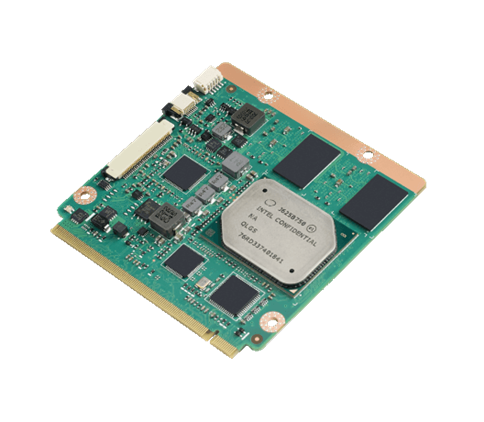
Qseven is a System-on-Module (SoM)standard designed for small-size embedded computer modules with low power consumption. This standard is optimized specifically for mobile and portable devices, IoT solutions and embedded system applications. Qseven accelerates the development process by providing modularity, ease of production and energy efficiency.
Features:
Compact Form Factor:
• Qseven modules are available in only 70 mm × 70 mm sizes. This allows them to be used on devices with limited space.
• Their compact size makes them ideal for portable and small embedded devices.
Low Power Consumption:
• They mostly use ARM or x86 based processors with low power consumption.
• They work quietly and efficiently with cooling solutions that do not require a fan.
Rich Peripheral Support:
• They support interfaces such as Ethernet, USB, SATA, SDIO, I2C, SPI, and PCIe.
• They also offer connection options such as HDMI, LVDS and DisplayPort for multimedia outputs.
Plug-and-Play Modularity:
• Qseven modules can be easily used by mounting on main boards.
• This approach not only makes the system design modular, but also simplifies the upgrade process.
Wide Processor Support:
• They support ARM and x86 processors to adapt to different performance levels and energy requirements.
Advantages:
- Standardization: They are supported by multiple manufacturers, which increases compatibility and continuity of supply.
- Flexibility: Processors and peripherals can easily be exchanged for different applications.
- Rapid Prototyping: Thanks to their modular structures, they reduce design and development times.
- Low Cost Manufacturing: They reduce manufacturing costs with their modular design.
Areas of Application:
- IoT (Internet of Things): Gateways and sensor centers.
- Portable Devices: Tablets/portable data collection devices.
- Industrial Automation: Machine control systems and robotic applications.
- Multimedia: Digital signage/video processing devices.
The Qseven standard offers a powerful solution, especially in embedded applications with space and energy constraints. With its modular structure, it offers flexibility and scalability.
What is SODIMM (Small Outline Dual Inline Memory Module)?
SODIMM (Small Outline Dual Inline Memory Module), with its compact design, is a type of memory module used especially in laptops, small form factor computers (SFF PCs), embedded systems and portable devices. It is smaller than standard DIMM modules and can transmit data over double data channels concurrently.
Technical Specifications:
Physical Dimensions:
- It is smaller than standard DIMM modules.
- Usually it is produced in 67.6mm×30mmsizes (there may be slight differences according to variants).
Pin Structure:
- It has pins that can be used single or double sided.
- Pin numbers can usually be 144, 200, 204, 260 or 288, depending on the type of memory used.
Types of Memory:
- There are several variants that support SDRAM, DDR, DDR2, DDR3, DDR4 and DDR5 memory technologies.
- SODIMMs are more commonly used with DDR4 and DDR5 in modern devices.
Low Power Consumption:
- It provides energy efficiency with low-voltage memory types, especially suitable for mobile devices.
Advantages:
- Compactness: Its small size allows it to be used in devices that offer limited space.
- Flexibility: SODIMM works compatible with a wide range of devices by supporting different types of memory.
- Easy Upgrade: With the plug-and-play feature, it makes upgrading memory on devices simple.
Disadvantages:
- Limited Capacity: It usually has lower memory capacities compared to standard DIMMs.
- Performance: It may not be sufficient for some high performance requirements, as its smaller structure may impose restrictions in terms of heat dissipation.
Areas of use:
- Laptops: It is widely used in devices that require high portability.
- Mini PCs: On compact desktop computers such as the Intel NUC.
- Embedded Systems: Industrial control units, medical devices and IoT solutions.
- Servers: Micro servers and blade servers.
Summary:
SODIMM is a memory solution optimized for devices with limited space. Its compactness and energy efficiency make it an ideal option in portable and embedded systems.
What is SoC (System on Chip)?
SoC (System on Chip) is a micro-electronic design concept that integrates all the basic components of a computer or electronic system on a single chip. SoC includes the processor, memory, input/output (I/O) interfaces, graphics processor (GPU), power management circuits and other necessary components. This allows a device to offer all its functionality on a single integrated circuit.
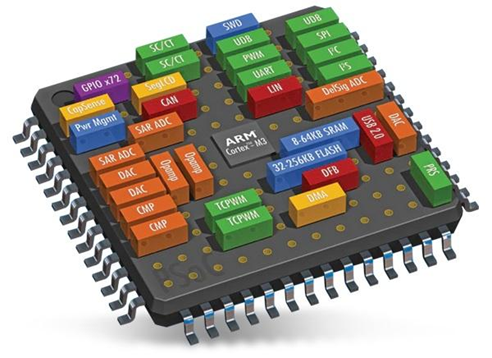
Components:
- Processor (CPU):
It is mostly ARM, x86 or RISC-V based.
Performs calculation and control functions on the system. - Graphics Processor (GPU):
It is integrated for graphics processing and display tasks.
It is especially important for multimedia applications on mobile devices. - Memory:
It may include RAM and flash memory components.
It meets the needs of fast data processing and storage. - Input/Output Interfaces:
It supports various connection protocols such as USB, UART, SPI, I2C, PCIe. - Power Management:
It contains circuits optimized for low power consumption. - Sensors and Peripherals:
Cameras, sound processors, GPS and other modules can be integrated.
Features:
- Compactness:
The fact that the entire system is located on a single chip reduces the device size. - Energy Efficiency:
Since all the components are on the same silicon, the energy loss is reduced. - Low Cost:
Manufacturing a single chip instead of individual components reduces costs. - Performance:
The SoC provides fast data processing and low latency with its high level of integration.
Advantages:
- Small size and low power consumption.
- Fewer parts requirements, making manufacturing processes easier.
- Ideal for mobile devices and IoT applications.
Disadvantages:
- Hardware customization options are limited.
- The failure of a single component can affect the entire chip.
Areas of use:
- Mobile Devices: Smartphones, tablets. (Example: Apple A-series, Qualcomm Snapdragon)
- IoT Devices: Smart home products, sensors.
- Automotive: Vehicle control units, autonomous driving systems.
- Consumer Electronics: Smart watches, TV boxes.
- Industrial and Medical Systems: Automation devices and medical equipment.
Summary:
The SoC brings together all the components needed for a device to work on a single chip. It is especially preferred in areas where compact, energy efficient and low cost solutions are required. This design is the cornerstone of modern electronic devices.
What is SoM (System on Module)?
SoM (System on Module) is a modular embedded system solution that integrates the basic components of an electronic system (processor, memory, power management and peripherals) on a small module. SoMs are usually operated by being mounted on a motherboard (carrier board), and this modular structure offers flexibility and scalability while also speeding up the design process.
Components:
- Processor (CPU or SoC):
It can be in different architectures, such as ARM, x86, RISC-V.
Executes the main computational functions of the system. - Memory:
It includes RAM and flash memory (eMMC, NAND).
It meets the needs of data processing and storage. - Power Management:
It provides the necessary power regulation and distribution for the module. - Input/Output Interfaces:
It offers connections such as USB, UART, I2C, SPI, Ethernet, PCIe. - Peripherals:
Additional components such as GPU, audio processors, network modules can be included.
Features:
- Compact Design:
All the critical components are located on a single module, making the module more compact and portable. - Modularity:
SoMs can easily be adapted and upgraded for different applications.
The system performance can be improved by modifying the module. - Ease of Manufacture:
Since complex components are integrated on the SoM, the motherboard design becomes simpler.
Advantages:
- Reduces Development Time: Since all the basic components are on a ready module, it speeds up the design process.
- Flexibility and Scalability: Depending on the application, different SoMs can be selected and the system can easily be upgraded.
- Standardized Solutions: It meets the industry standards that ensure compliance between manufacturers.
- Low Risk: Since the complex design is solved in SoM, it reduces design errors and malfunctions.
Disadvantages:
- Motherboard Requirement: It requires a carrier board to operate.
- Fixed Configuration: The components on the SoM are usually not customizable.
- Cost: In some cases, the use of SoM may be more costly than a customized design.
Areas of use:
- IoT Devices: Sensor gateways, data collection units.
- Industrial Automation: Robotic control systems, machine automation.
- Medical Devices: Patient monitoring systems, imaging devices.
- Portable Devices: Portable terminals and measuring devices.
- Automotive Applications: Autonomous driving systems, vehicle infotainment systems.
The Difference Between SoC and SoM:
- SoC (System on Chip) is the integration of a processor and other components into a single chip.
- SoM (System on Module), on the other hand, represents a SoC and other additional components on a modular circuit board.
Summary:
SoM is a modular and scalable solution that facilitates the development of complex electronic systems. These structures, which can be customized according to application requirements, offer a great advantage, especially in rapid prototyping and industrial applications.
What is FPGA SoM (Field Programmable Gate Array System on Module)?
FPGA SoM (Field Programmable Gate Array System on Module) is a modular electronic design solution that includes a Field Programmable Gate Array (FPGA)chip and the additional components necessary for its operation. FPGA SoM, with its programmable logic circuit, offers a flexible and customizable system. Also, this module is operated by mounting on a carrier board.
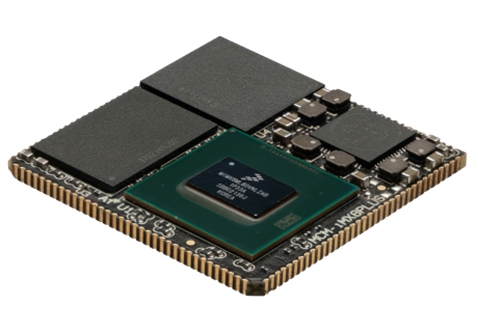
The Basic Components of FPGA SoM:
- FPGA Chip:
- An FPGA is a logic circuit that can be reprogrammed by the user.
- It is usually supplied from manufacturers such as Xilinx, Intel (Altera), Lattice or Microchip.
- Memory:
- Memory components such as SDRAM, DDR3, DDR4 or QSPI Flash provide fast data access to FPGA, as well as storage.
- Power Management:
- It includes an integrated power management system that meets the different voltage needs of the FPGA.
- Peripherals and Interfaces:
- UART, I2C, SPI, GPIO, Ethernet, PCIe and other high-speed interfaces are supported.
- Optionally, special peripherals such as video outputs, ADC/DAC components can also be integrated.
- Configuration and Programming Hardware:
- There is a JTAG interface or a built-in installer for programming the FPGA.
- Design Optimization on PCB:
- Critical design elements such as high-speed signal paths and RF components are optimized on SoM.
Features of FPGA SOM:
- Programmability:
- FPGA SoM provides the user with the opportunity to design and quickly modify custom logic circuits.
- High Performance:
- With its parallel processing capabilities, it quickly performs complex calculation and data processing tasks.
- Compact and Modular Structure:
- Since all the critical components are brought together on the SoM, it simplifies the carrier board design.
- Flexibility:
- Various FPGA SoM solutions are available according to different FPGA models or performance requirements.
Advantages:
- Rapid Development:
Since the infrastructure required for FPGA design is ready, the carrier card designing process becomes easier. - High Scalability:
Different SOMs can be used on the same carrier card for different projects. - Repeatability and Reliability:
The risk of errors is reduced, as the critical design details are fulfilled on the SoM. - Energy Efficiency:
Optimizable energy consumption according to the application.
Disadvantages:
- Cost:
FPGA SOMs are usually more expensive than integrated designs. - Motherboard Requirement:
A carrier card is required for operation. - Development Complexity:
FPGA programming requires expertise.
Areas of use:
- Industrial Automation:
- Machine control, data acquisition, and robotic systems.
- Communication Systems:
- 5G base stations, network equipment, and signal processing.
- Medical Devices:
- Imaging systems, patient monitoring devices.
- Defense and Aviation:
- Radar systems, electronic warfare applications.
- Artificial Intelligence and Machine Learning:
- Accelerated data processing and algorithm execution.
Summary:
FPGA SoM offers the power of re-programmable FPGA in a compact and modular format. It offers fast development, flexibility and customization in complex and high-performance applications. It is a powerful technology that is preferred particularly in applications that need parallel processing capacity.
What is SBC (Single Board Computer)?
SBC (Single Board Computer) is a type of compact computer in which all the components required for the operation of a computer (processor, memory, storage, input/output connections and power management) are integrated on a single circuit board. SBCs are versatile like desktop computers, but stand out for their smaller size and low energy consumption.
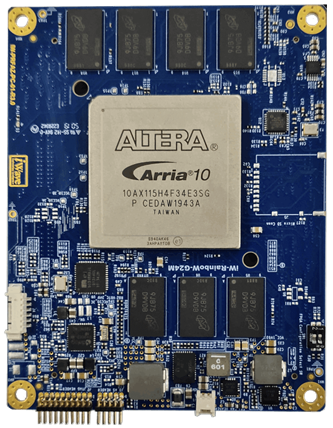
Basic Components:
- Processor (CPU):
Usually ARM, x86, RISC-V or similar architectures are used.
Some models integrate a GPU or SoC (System on Chip). - Memory (RAM):
It is usually integrated into the motherboard and cannot be expanded. - Storage:
eMMC is offered with microSD card slots or SSD connections. - Input/Output Connections (I/O):
It includes connections such as USB, HDMI, Ethernet, GPIO (General Purpose Input/Output), UART, SPI, and I2C. - Power Management:
A circuit that meets the energy needs of the SBC is available. - Peripherals and Expansion Slots:
Expansion options are available for camera connections, display connections, and additional components.
Features:
- An Integrated Design on a Single Card:
The processor, memory, storage and all other components are located on a single board.
- Compact and Portable:
Its small size makes it ideal for projects that require portability.
- Low Power Consumption:
It is suitable for mobile and IoT applications, with its energy efficiency.
- Ready To Use:
Most SBCs are ready for the operating system (usually Linux or Android).
Advantages:
- Compactness: Its small and lightweight design is suitable for applications with limited space.
- Versatility: It can be used in education, research, prototyping and commercial products.
- Ease of Operation: A wide range of software and hardware community support is available.
- Low Cost: It is much more economical compared to a desktop computer.
Disadvantages:
- Performance Constraints: It may be limited/insufficient for applications that require high performance.
- Hardware Customization Issue: The components on the board are usually fixed and cannot be replaced.
- Limits of Expansion: External connections are usually limited.
Areas of use:
- IoT (Internet of Things): Sensor gateways, smart home devices.
- Education and Research: Coding, electronics and robotics educational projects.
- Media Players: Digital signs, home theater systems.
- Industrial Automation: Control systems, data collection devices.
- Robotics: Automation and control projects.
Common Examples of SBC:
- Raspberry Pi: It is one of the most popular SBC models, and widely used for training and prototyping.
- BeagleBone Black: It is suitable for industrial and embedded systems with advanced GPIO options.
- NVIDIA Jetson Nano: It focuses on artificial intelligence and image processing applications.
Summary:
SBC offers a compact and energy-efficient solution that offers all the functions of a computer on a single card. With its wide range of use and modular structure, it is preferred in many fields from IoT to educational projects.
What is PCIe Cards (Peripheral Component Interconnect Express Cards)?
PCIe Cards, are hardware cards that provide expansion capabilities to computer systems or embedded devices via Peripheral Component Interconnect Express (PCIe) connection standard. PCIe boards offer a modular and flexible solution that is used to provide high-speed data transmission.
What is PCIe?
PCIe is a high-speed serial communication standard used in modern computers. It has replaced the conventional PCI and PCI-X standards, and offers high bandwidth, low latency and scalability.
The Basic Components of PCIe Cards:
- Connection Interface (PCIe Lane):
- It connects to PCIe slots for data transmission.
- It can have different widths, such as x1, x4, x8, x16.
- Functional Components:
- It contains various components based on the purpose of the board (for example, GPU, NIC, storage controllers).
- PCB Design:
- It is optimized for high-speed data streaming.
- Cooling Solutions:
- Prevents overheating with active or passive cooling systems.
Features:
- High-Speed Data Transmission:
PCIe boards allow bidirectional data transmission for each PCIe line (for example, in PCIe Gen 4.0, each line can offer a speed of 16 GB/s). - Scalability:
It adapts to slots and boards of different widths. - Low Latency:
It offers advantages in applications that require critical timing. - Modularity:
Special boards can be added for different functions.
Advantages:
- Performance Increase: It offers high bandwidth and low latency.
- Flexibility: It can easily expand the existing features of a system.
- Compliant with Industry Standards: It works with many of the modern motherboards and systems.
Disadvantages:
- Physical Size and Strength Requirements: Some boards may consume too much or too much power.
- Limited PCIe Slots: Since the PCIe slots on a motherboard are limited, it can be difficult to use a large number of boards at the same time.
Areas of use:
- Graphics Processing Cards (GPU):
For gaming, video editing and artificial intelligence applications. - Network Boards (NIC):
For high-speed Ethernet or wireless connection. - Storage Controllers:
NVMe SSDs and RAID cards. - Sound Boards:
For high-quality audio processing and output. - FPGA and AI Processing Boards:
Customized hardware accelerators. - Capture Boards:
For video and image processing.
PCIe Generations and Bandwidths:
| Generation | Speed/Lane (GB/s) | Total Speed (x16) (GB/s) |
| PCIe 1.0 | 0.25 | 4.0 |
| PCIe 2.0 | 0.5 | 8.0 |
| PCIe 3.0 | 0.985 | 15.75 |
| PCIe 4.0 | 1.969 | 31.5 |
| PCIe 5.0 | 3.938 | 63.0 |
Summary:
PCIe Boards are expansion boards that offer high-speed data processing and flexibility for modern computer systems. It is used in areas such as graphics processing, data storage, network connections and customized hardware acceleration. These boards play a critical role in various applications by taking advantage of the low latency and high speed advantages provided by the PCIe interface.
