


Technological Revolution: Autonomous Vehicles
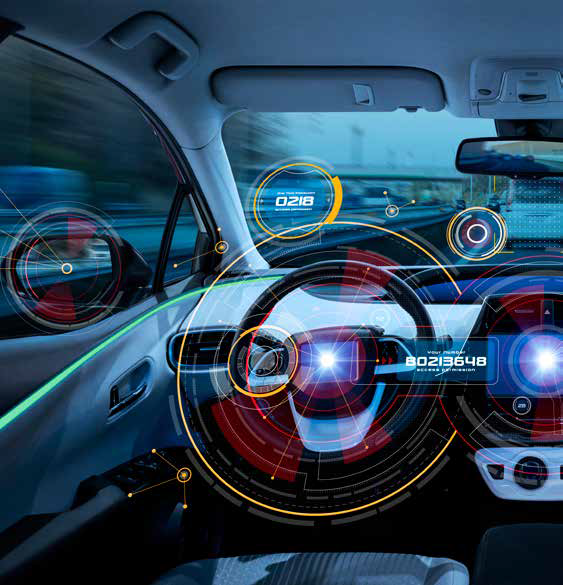
One of the sectors that give life to the world economy is undoubtedly the automobile sector. We all know that the transition to autonomous (driverless) cars in vehicle technologies has accelerated considerably in recent years and has attracted a huge attention. Among the countries using driverless car technology that leads the new age, are the United States, Great Britain, China, South Korea, the Netherlands, Germany and Singapore. While the evolutionary change of the transportation sector is further accelerating daily, the states of California and Arizona, which carry this technology to municipalities, are setting examples for the world.
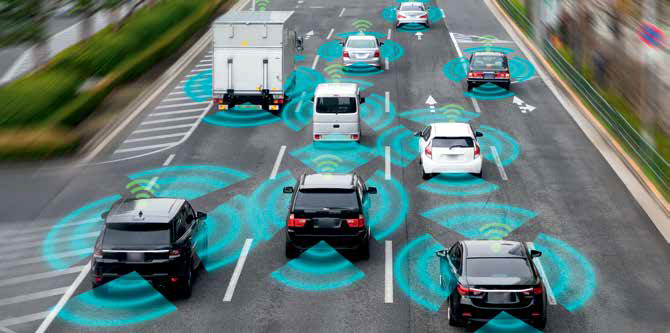
Developments in the automotive sector are among the major steps taken towards the 4th Industrial Revolution. Considering the vehicles that have gained value in the market, we can see that roughly 30% of the vehicles are now electric vehicles and it is estimated that this rate will increase to about 80% with the future innovations in the sector. Systems such as sensor data, wide data analysis, machine learning and M2M inter-machine communication system in autonomous vehicles are of great importance for the successful implementation of the Internet of Things concept. Autonomous vehicles on the market assess the sensor data and analyses and allow them to move with machine learning.
The autonomous vehicles, which can be an important part of our life with the
developing technologies, are about to hit the roads in a few years.
A Technology Ready to be Used After 100 Years
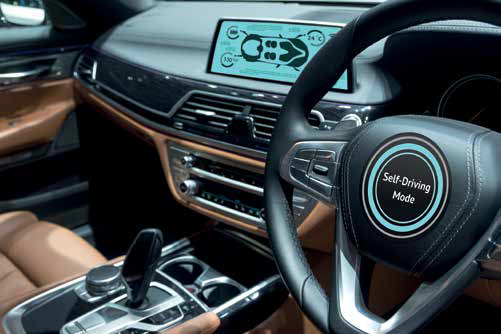
Autonomous vehicles are the cars that can travel without any intervention by sensing the traffic flow and environment without the need for a driver thanks to the automatic control systems they are equipped with. Looking at the history of driverless cars that can sense the environment using the technologies such as GPS, lidar, radar and computer vision, we see that some of the systems that stood out in the 1920s have already given clues about this technology. The first driverless car in traffic was in 1984 as a product of Navlab and ALV projects carried out by Carnegie Mellon University. This project was followed by the Eureka Prometheus project jointly realized by the Mercedes-Benz and the Bundeswehr University in 1987, but after that, only a few managed to hit the road, although thousands of vehicles were produced. As the technology further developed, search engine giant Google joined the bundle of manufacturers using intelligent system technologies in their vehicles. The US-based company began testing its first autonomous vehicle prototype with humans in 2014. 100 units of these vehicles, which had an extremely different appearance, were produced and tested in various test cycles in different regions. The autonomous vehicles, which can be an important part of our life with the developing technologies, are about to hit the roads in a few years. Major automotive manufacturers state that the preparations will be completed by 2025 and autonomous vehicles will be actively in traffic by then. But there are also some issues with this revolutionary product that may be the beginning of a new era. Assumptions such as that their sensors, which cannot completely perceive the environment, will cause traffic accidents, still leave questions.
Autonomous vehicles on the market assess the sensor data and analyses and allow them to move with machine learning.
Another concern is that these autonomous cars may give incorrect decisions particularly in the intersections where the traffic is heavy, causing severe accidents. One of the most important obstacles that the autonomous vehicles face is the price factor. The fact that a high-cost Lidar (Laser Radar) system will be used, every new development technology added to the planned vehicles will lead to a price increase worth thousands of dollars in the final sales price of the vehicle.
Autonomous Vehicles Will Provide Equal Opportunities
In addition to the negative assumptions lie ahead, it should also be remembered that driverless cars create equality opportunities, such as making is possible for disabled people to hit the road. Among the improvements to be achieved is to prevent traffic accidents caused by people’s mistakes, with the driverless cars that work perfectly and obey the traffic rules strictly. It is thought that with the spread of shared vehicles, both the traffic accidents and traffic congestion will decrease, as the speed limits will be increased.
