


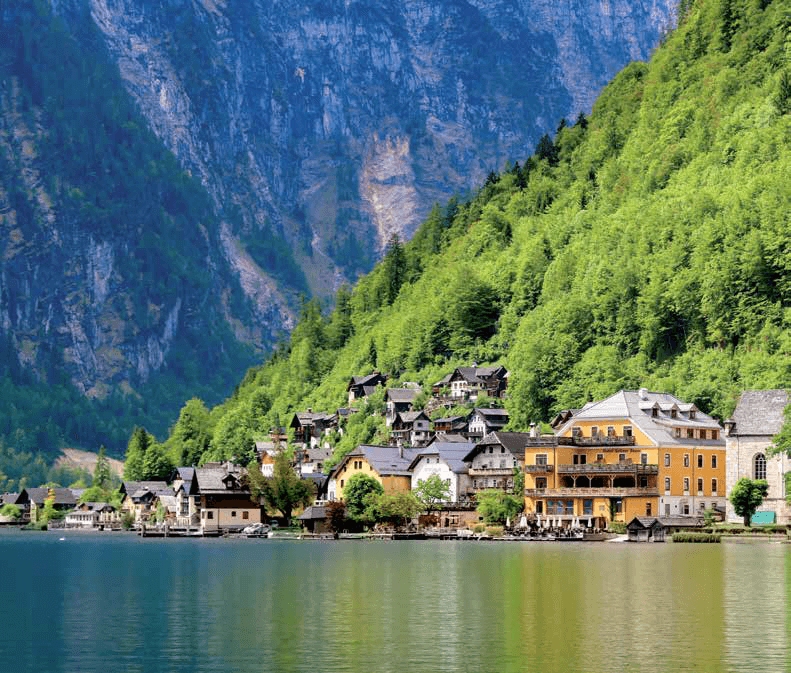
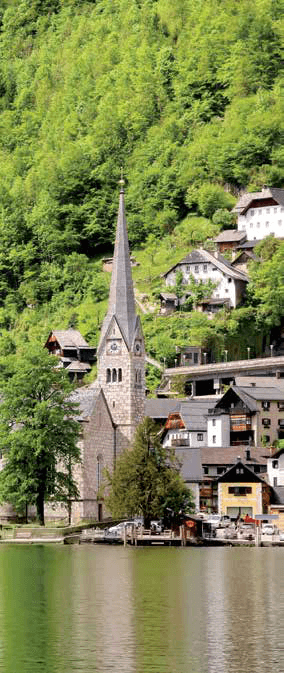
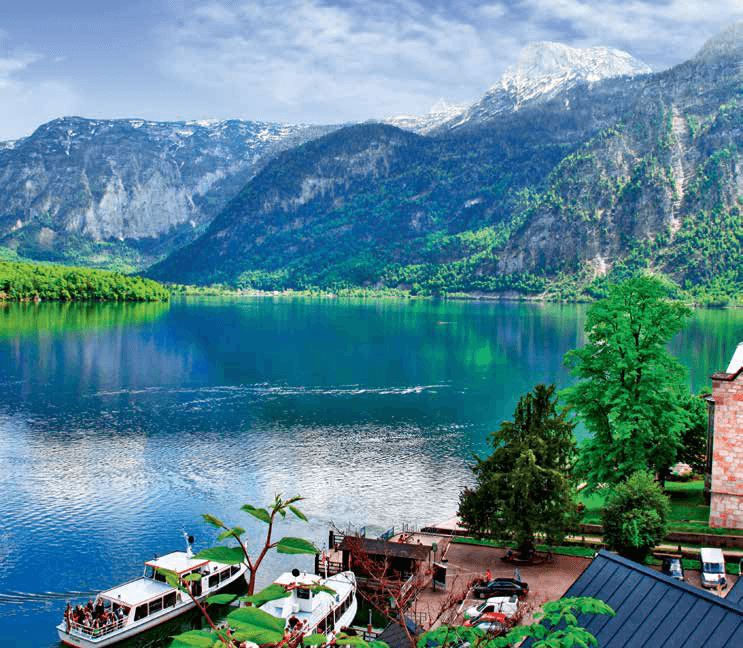
Located between the Austrian cities of Salzburg and Graz, Hallstatt has recently been frequented by many travelers and photography enthusiasts. Hallstatt, which feels like it is right in the middle of a fairy tale, is one of the oldest settlements in Europe with its breathtaking view. Hallstatt, a true natural wonder, has captivated the Chinese tourists who have visited there so much that a one-of-a-kind replica of this charming town was opened in China in 2012. This charming town, in addition to its natural beauty, was included in the list of World Cultural Heritage by UNESCO in 1997 with its rich historical history of up to 7000 years. Hallstatt, with a population of about 1000 people, is the oldest village in Austria and home to the world’s first salt mine. This town, which can be characterized as a garden of tranquility with its magnificent nature and historical riches, is an unusual route for those who are tired of the monotony of urban life.
Salt Mines
Hallstatt is also home to the world’s first salt mine. Hallstatt is one of the rare towns that has managed to blend its dazzling salt caves and mines with tourism activities. Tourists can access the salt mines located in the highlands by using funicular and on foot. With special suits that protect against the cold weather, tourists can descend almost 300 meters below the ground. The most fun part is to reach the mine by using the natural slides. The local guides in the mine not only share information about the formation of salt, but also win the love of the visitors with the salt gifts they give. At the end of this mineral journey, you can enjoy your meal against the extraordinary view of the Alpine Mountains.
Skywalk
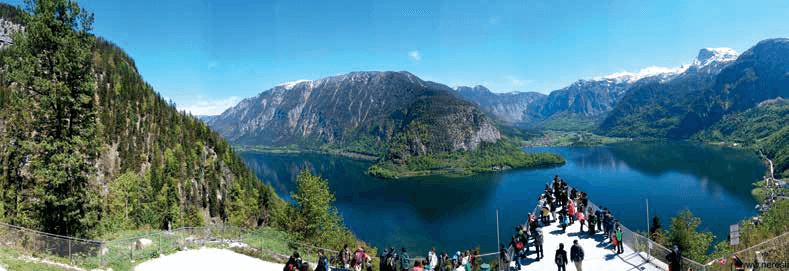
The most touristic place in the town, the Skywalk, is located near the salt mine. The Skywalk, which is located about 360 meters above the lake, has been registered as a World Heritage Viewpoint, with the panoramic view it offers. Visitors are greeted by an endless view on a triangle shaped terrace. There is also a cafe in order to relax in this natural wonder, which is also frequented by photography lovers. During your visit, you will realize that peace jars into your bones.
Hallstatt was included in the list of World Cultural Heritage by UNESCO in 1997.

Wolfgang Lake
Although Austria does not have a seashore, it offers magnificent views to its visitors with its beautiful lakes. Located in Austria’s region of lakes, Wolfgang lake is one of the places frequented by those who want to enjoy the view. The lake is named after Saint Wolfgang, who allegedly built a church in the area 1000 years ago. There is also a Mozart village on the shore of the lake, which promises pleasant moments at the skirts of the Alpine Mountains.
Hallstatt Museum
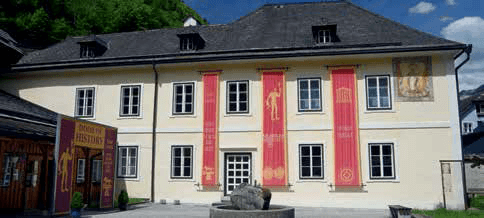
The Hallstatt Museum is located in the main square of the city. If you want to get more detailed information about the history and development of Hallstatt, one of the oldest settlements in Europe, you should definitely visit here. In the museum, you can also access many images that have been the source of history from archaeological remains.
Market Square
Hallstatt Market Square is one of the rare, quiet and cozy squares to be seen. There is a Trinity (Father, Son and Holy Spirit) column in the square, which the locals call “The Holy Trinity”, and which is highly respected by the local people. Another structure that should be seen on the square is the Hallstatt Cultural Heritage Museum, which those who are interested in history should definitely visit. You will enjoy discovering the history of Hallstatt and the Evangelical Church, which has survived from the 18th century to the present day. From the terrace of the church you should get a view of the whole village. There are beautiful cafes, restaurants and hotels in the square, which has narrow streets, triangle shaped houses, as well as quite a lot of souvenir shops.

BeInhaus
In addition to its amazing beauty, Hallstatt is also known for the Beinhaus, an enigmatic building. Beinhaus, which means “House of Bones”, is located just next to the Michael Chapel and within the Hallstatt Cemetery. The structure makes you feel like you’re in a horror movie for a moment. Previously, due to the limited burial space, the deceased were buried temporarily, and after 10-15 years, their bones were collected and left to get whitened under the sun. This has become a tradition since the 1700s, and over time they have started to draw various motifs, along with names, on the skulls. Later, after the Catholic church approved the cremation of the dead, this practice was stopped.
Copy-Paste Hallstatt
The “replica” Hallstatt, which the Chinese couldn’t resist to build, costed $980M. The replica Hallstatt, established at a distance of 60 kilometers from the city of Huizhou in the Guangdong province of China, has an area of one million square kilometers.
