Forms of Relay Contacts: Basic Structures for Efficient Current Control in Electronics
Relays play a major role in both electrical systems and electronic circuits. In electronic applications, relays are often used to control larger loads with low current. Contact form layouts determine under which conditions the relays will be active and how the current in the circuit will be directed. Basic contact structures such as Form A, Form B and Form C offer suitable solutions for different tasks in both electrical circuits and electronic systems.
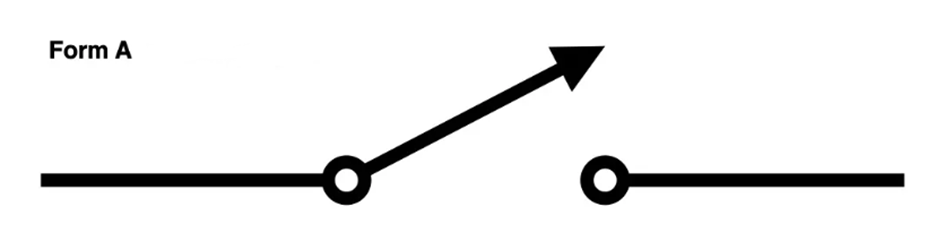
Form A is the most commonly used contact structure and normally contains an Open (NO) contact. When the relay is energized, this contact closes and completes the circuit and provides current transmission to the electronic circuit.
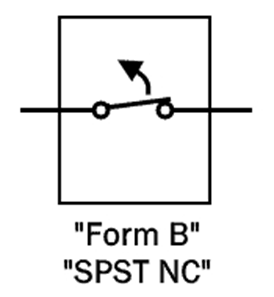
Form B has a “Normally Closed (NC)” contact layout. When the relay is active, this contact is opened and the current in the circuit is cut off to ensure safety in the system.

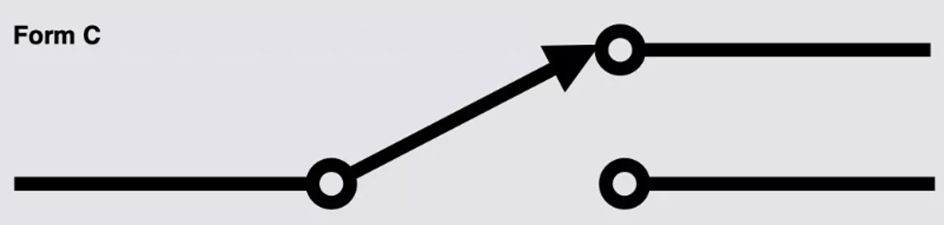
Form C contains one “Normally Open (NO)” and one “Normally Closed (NC)” contact. This structure allows relays to switch between two different circuits and offers flexibility in both electrical and electronic applications. Each contact form is selected according to specific requirements, increasing the efficiency of the system.
1 Form A (SPST NO): In the circuit, the contacts are opened and closed in a way that they are normally in the Open (NO) position.
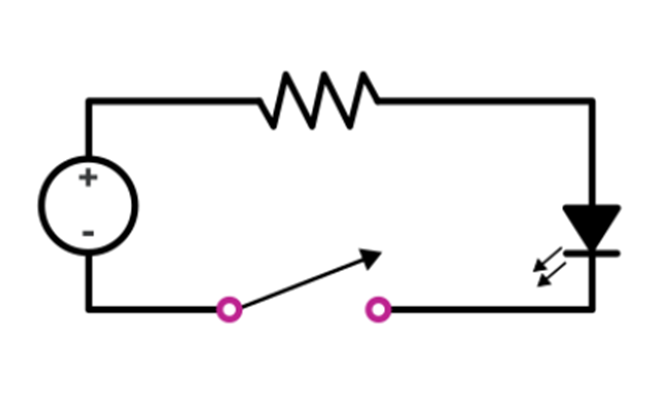
1 Form B (SPST NC): This contact structure initially has a closed circuit state when no current is applied to its inner coil. Therefore, it connects the power with the load. When voltage is applied to the coil of the relay, the inner switch switches to ON position and disconnects the power from the load.
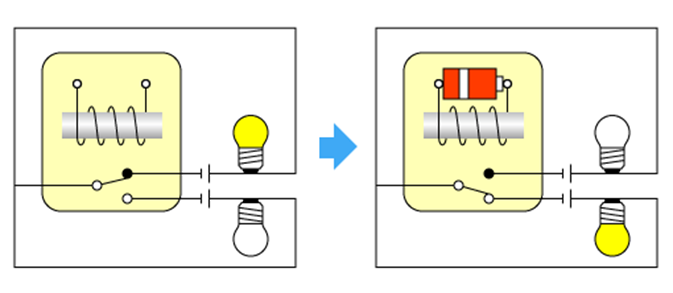
1 Form C (SPDT): One circuit is transferred to another circuit. This requires a three-terminal structure: one input and two outputs. The input can be changed to switch between these two outputs.
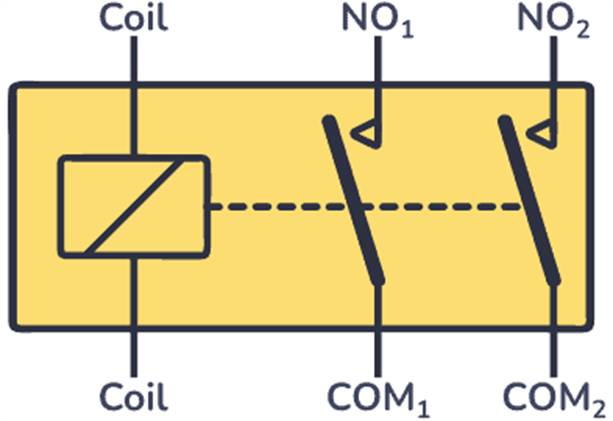
2 Form A (DPST): Double Pole Single Throw. This refers to a relay that controls two circuits. There may be 2 Form A or 2 Form B, depending on whether the contacts are Normally Open or Normally Closed. This is often referred to as ’DPST-NO‘ or ’DPST-NC’.
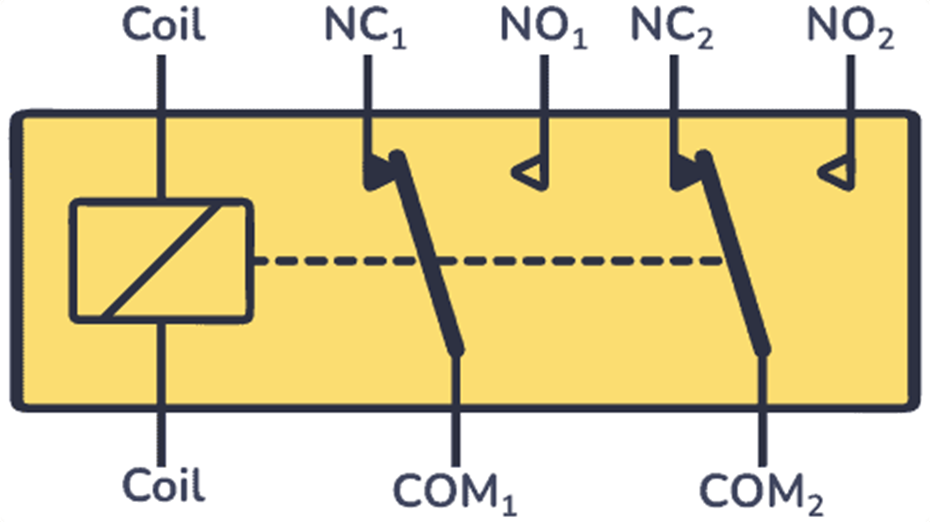
2 Form C (DPDT): This is the transfer of two circuits to another circuit. This requires six terminals with two inputs and four outputs. Switching between two inputs and four outputs is possible. Example: This can be used to transfer power from a line voltage to a battery backup.
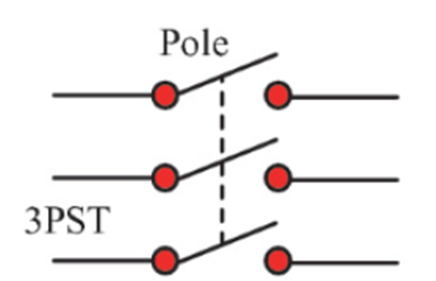
3 Form A (3PST): 3 Pole Single Throw. This refers to a relay that controls three circuits. There may be 3 Form A or 3 Form B, depending on whether the contacts are Normally Open or Normally Closed. This is often referred to as ‘3PST-NO’ or ‘3PST-NC’.