


Brain-Computer Interface (BCI) is a technology that allows the human brain to directly communicate with a computer or an external device, and is a combination of neuroscience, engineering and computer science. This technology converts the signals into digital data and transmits them to a computer, with the electrodes that detect the electrical activity of the brain. BCI systems work in two types: invasive (insertion of electrodes into the brain) and non-invasive (electrodes on the scalp).

The foundations of BBA technology were laid in the 1970s with electro-encephalography (EEG). During this period, several studies began to analyze brain functions using EEG signals. In the 1990s, systems that allowed paralyzed patients to communicate through brain signals started to be developed. In the 21st century, the BCI systems have become able to perform even more complex tasks, thanks to more powerful computers, advanced algorithms, as well as artificial intelligence.
Today, BCI offers potential applications in the fields of medicine, education, gaming and military, and is expected to revolutionize human-machine interaction in the near future. Researches are ongoing to make this rather new technology more user-friendly and reliable.

How Does the Brain-Computer Interface Work?
BCIs detect brain signals and convert them into digital data. The main stages of this process are:
Perception of Neural Activity: The electrical activity of the brain is measured through electrodes. These electrodes can be placed on the surface of the brain, as well as in deeper layers. In non-invasive methods, these electrodes are placed externally on the head, while in invasive methods they are placed directly on the brain tissue.
Data Processing: The electrical signals received from the brain are processed by special algorithms. These algorithms analyze signals from the motor, sensory or cognitive regions of the brain and convert them into data that a computer can recognize.
Interaction and Response: These processed data can be used by a computer or another digital device. For example, a person can move a robotic arm with brain signals or type on a computer screen with the power of “thinking”.
BCIs typically fall into two main categories: İnvasive and non-invasive methods.

Invasive Brain-Computer Interfaces:
In these BCIs, the electrodes are placed inside the brain. Then they are connected directly to the brain tissue and detect signals with high sensitivity.
Advantages: It offers more accurate and high resolution signal transmission. It can measure activities in deeper areas of the brain.
Disadvantages: It requires a surgical procedure that carries potential risks (e.g. infection, brain damage).
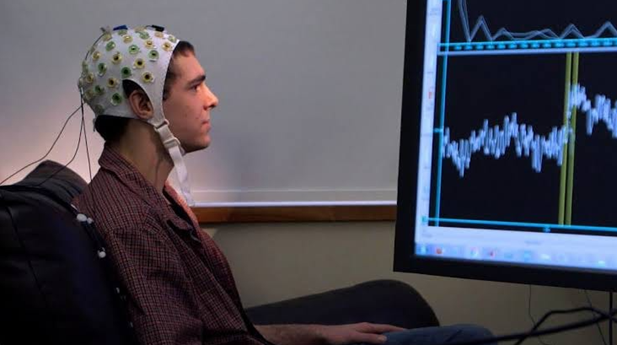
Non-invasive Brain-Computer Interfaces:
In this method, external sensors placed on the head are used to measure brain’s activity. For this, technologies such as electro-encephalography (EEG) are used.
Advantages: It is safer and painless, since no intervention on the brain tissue is required.
Disadvantages: The signal quality is lower, and it is difficult to measure information from deep in the brain.
Application Areas of Brain-Computer Interfaces
Brain-Computer Interfaces have the potential to revolutionize many different areas:
- Health and Neurological Treatments: BCIs can be used in the treatment of diseases such as stroke, Parkinson’s disease, ALS (Amyotrophic Lateral Sclerosis). For instance, a paralyzed person can move a robotic arm or control a prosthetic leg with their brain signals.
- Precision Robotic Control: Robots can be controlled through brain signals precisely. This can allow surgical robots to be used more precisely and effectively in the medical field.
- Virtual Reality (VR) and Augmented Reality (AR): BCIs allow for a more natural interaction in virtual worlds and augmented reality experiences. For instance, a person can move in a virtual environment with their brain power.
- Communication and Education: BCI technologies can help individuals with mental disabilities communicate. It can also revolutionize education by speeding up knowledge transfer.
- Mind Control and Artificial Intelligence Integration: It allows the boundaries between human mind and AI to become increasingly virtual. BCIs can enhance human cognitive capacity by integrating AI algorithms with brain activities.
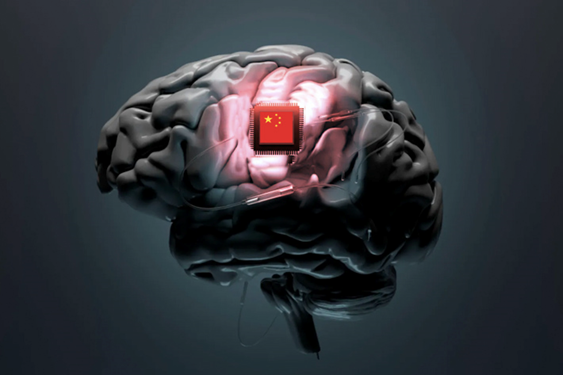
The Risks of “Invasive” BCI Implantation
BCI technology uses implants aimed at directly establishing a connection between the brain and the outside life. However, since this process is invasive, it brings with it several risks of infections such as meningitis, brain abscess or blood poisoning (sepsis). Sterile surgical techniques, appropriate use of antibiotics and bio-compatible implant materials are required to mitigate such risks.
During surgical procedures or when the implant remains in place for a long time, damage to brain tissue, bleeding or edema may occur. This can also affect brain functioning. Such risks are minimized by sensitive surgical methods and advanced imaging techniques.
The immune system may react to the implant and lead to its rejection. In such a case, inflammation, tissue damage or loss of implant function can be observed. To prevent such issues, materials with high bio-compatibility and immunosuppressive drugs are used.
Brain or nerve fibers may be damaged during surgical procedures or if the implant is displaced. This can also lead to paralysis or sensory loss. Therefore, surgeons should know the anatomy of the nervous system well and pay attention to these regions during the procedure.
Eventually, BCI implantation can bring serious health risks. However, these risks can be minimized with experienced surgeons, advanced medical imaging techniques and highly bio-compatible materials.
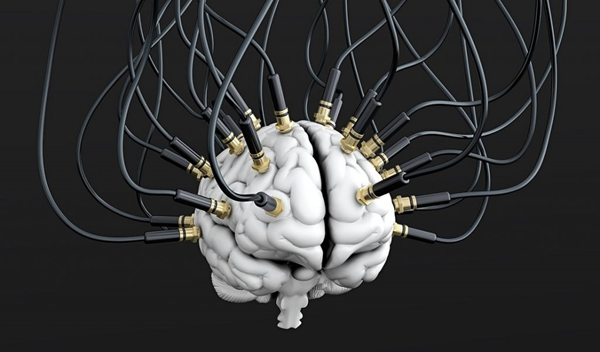
The Risks of “Non-Invasive” BCI Systems
Non-invasive BBA systems enable communication by measuring brain activity without directly interfering with the brain. However, although these methods are safer than invasive ones, they may carry some risks too.
For instance, when the electrodes used in methods such as EEG come into contact with the skin, they can cause allergic reactions in some individuals. These reactions may show symptoms such as redness, itching and swelling. This risk can be mitigated by using hypoallergenic materials and also taking into account the patient’s allergy history.
Long-term use of electrodes can lead to ailments such as headaches. The pressure or electrical activity exerted by the electrodes is one of the causes of headache. Also, the presence of electrodes and recording of brain activity can negatively affect the quality of sleep and lead to sleep disorders.
Being aware of these risks, careful evaluation should be made before the use of non-invasive BBA systems, and these effects should be minimized during the design phase.
Brain-Computer Interface (BBA) technology has a great potential, especially in the medical field. Companies such as Neuralink, Paradromics, Motif Neurotech are aiming to convert brain signals by speech or movement. While Neuralink works with chips embedded deep in the brain, some companies offer more superficial solutions. Also, companies such as Motrif Neurotech are trying to brain signals to treat psychological issues.
The BCI applications outside of the medical sector are generally in areas such as improving neuromuscular performance and occupational safety. For instance, attention-enhancing warnings can be provided through brain signals, or employees’ stress levels can be monitored. Also, BCI can be used to improve safety and comfort in environments such as smart homes and transportation vehicles.
The gaming and entertainment sectors are also two of major areas where BCI is used extensively. The state of the brain can affect gameplay in computer games. In the education sector, BCI can open the pave for new methods aimed at increasing the learning speed by monitoring brain activities. In the field of security, on the other hand, biometric passwords can be developed with brain signals, and this can offer security measures that are difficult to fake.

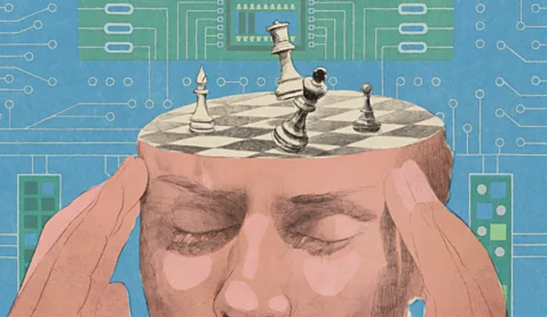
The company that attracts the most attention in the field of Brain-Computer Interface (BCI) technology is Neuralink, owned by Elon Musk. With this technology, Musk aims not only to cure diseases or make life easier for people with disabilities, but also to increase the capacity of the human mind. Although Neuralink has been criticized for its experiments on chimpanzees so far, it is now looking for individuals with paralysis to volunteer to start trials on humans. With a device called Telepathy developed by the company, it is now possible to play chess or move a computer cursor with mind power. The technology used is much more advanced than the previous methods, and the electrodes connected to the brain are quite small, almost invisible.
Another important company working on BCI is Synchron, which has received support from Bill Gates and Jeff Bezos. Synchron has installed BCI implants in 10 people so far, and is continuing its activities to conduct large clinical trials. Also, the US Defense Advanced Research Projects Agency (DARPA) supports BCI technologies in both the military and medical fields. DARPA is conducting researches on subject matters such as controlling prosthetic limbs through brain, restoring the sense of touch, treating depression, and strengthening memory.

Facebook also started a BCI research following Neuralink in 2017. However, they canceled this project to develop an optical header that would allow typing without using a keyboard, four years after due to financial reasons. They adopted another approach, which aims to track muscle signals in virtual reality with a controller that can be worn on the wrist.
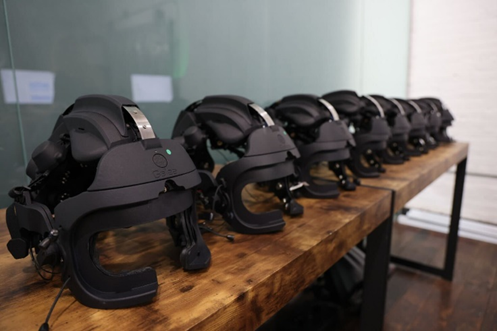
OpenBBA, an extension of OpenAI, also develops open-source bio-sensing and neuro-science tools. These tools are designed in an ethical manner by protecting the rights and mental safety of users. Galea, the latest product of OpenBBA, can be used in virtual and augmented reality environments by combining systems that track eye movements and physical sensors. Galea offers a platform that measures user’s heart, muscle, skin, eye and brain activity. This product can also be used in the entertainment industry in addition to scientific studies, and its price is currently $25,000.
Among the leading academic institutions in the USA, UCLA Berkeley, MIT, Stanford, Dec, Caltech, Brown and Duke universities lead the BCI researches. Academic institutions operating in this field aim to carry this technology further, by cooperating with both private companies and government institutions. Since BCI is an inter-disciplinary field, those who want to work in this field need to have knowledge in many different disciplines such as biomedical engineering, neuro-science and computer engineering.
