


WiFi module MCUs are modules with TCP/IP protocol that can enable any micro-controller to access your WiFi network. WiFi modules connect electronic systems to the Internet wirelessly. The system connects to the Internet with WiFi modules in electronic circuits, allowing them to be used in IoT projects. With these modules, data can be taken from sensors and shared over the Internet, and the system can be controlled by a computer or smartphone. Also, the system can be controlled by using a personal modem or using the smart phone of the user as a WiFi. The areas of use of WiFi modules are quite wide. Various smart home systems can be created with any WiFi module. To give an example, many features such as room lamp, table lamp, door lock, alarm, music player, remote monitoring of the weather conditions at home, as well as controlling household appliances such as air conditioners and televisions via WiFi, can be achieved with WiFi modules. The data obtained with the help of various sensors in robots or any electronic system can be displayed using these modules from a mobile phone or via a computer. Again, data can be obtained via any website with WiFi modules. There are many applications in which WiFi modules are used, such as wearable technologies, modern agriculture and military fields.

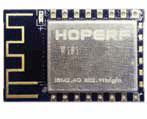
The HopeRF company offers a WiFi module with the code HM-WF8266. The HM-WF8266 module can be used as a WiFi point. By assigning a name and a password to the module, it can be displayed from the WiFi network menus of devices such as smartphones, computers, tablets, and by entering the password, a connection can be established between the module and the device. Also, the user can connect to any modem whose username and password are known, using the module coded HM-WF8266. In addition, smartphones can also establish a connection between the module and it, by using it as a WiFi point just like a modem. Some features of the HM-WF8266 coded 2.4 GHz wireless transceiver WiFi module by HopeRF are as follows:
using the NUC029L board;
- Supports STA/AP/STA+AP operating modes,
- Supports UTRT/GPIO/ADC/PWM/IIC,
- High precision 10-bit internal ADC,
- Serial local update and remote firmware upgrade (FOTA) support,
- Embedded LWIP protocol,
- WPA/WPA2 security mechanism,
- WEP/TKIP/AES encryption type,
- IPv4/TCP/UDP/HTTP/FTP/MQTT network protocol.
The HM-WF8266 module can be programmed using the micro-controllers from companies such as Arduino and Nuvoton. The module works with 3.3V. The module can be fed from the outside or via the micro-controller. The module is programmed using the UART communication protocol with the Rx and Tx pins on the module. The Rx pin on the module is connected to the Tx pin of the processor, and the Tx pin on the module is connected to the Rx pin of the processor. The HM-WF8266 module is controlled by AT commands sent via UART communication.
We send the “AT” command to the HM-WF8266 WiFi module at first. If there is no problem with our connection, the module gives an OK response. The command used to reset the module is “AT+RST”. There are a large number of AT commands with various functions, such as “AT+CWSAP” to assign a name and password to the module, and “AT+CWMODE” to determine the module’s operating mode.
“Various smart home systems can be created with any WiFi module.”
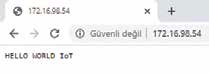
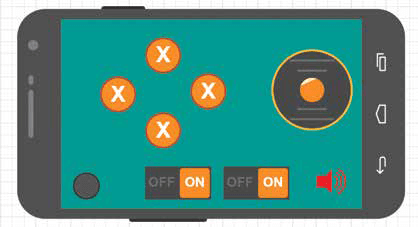
Several mobile applications and websites created to use the HM-WF8266 WiFi module MCU with Arduino are available. There are also various libraries written to control the module with Arduino. With these mobile applications or websites, users can create menus that allow them to use the module compatible with Arduino. A large number of features such as various buttons, switches, joysticks and RGB color buttons can be added to the menus. With WiFi modules, menus with HTML codes can be created at an IP address received from the module with AT commands. Messages can be sent to this IP address. Buttons added to the menu created with HTML codes in the IP address or a number of different features allow the module to perform various functions. Ozdisan Elektronik has prepared two different sample codes for the module, using the Nuvoton brand Nuc029L processor. The first of these sample codes assigns a name and password to the module, allowing the module to establish a connection with any device with a WiFi connection. The second sample code, on the other hand, allows the module to connect to any WiFi point. With this sample code, data can be sent to an IP address generated by the module. The sample codes can be accessed from the Ozdisan Technical Library.
