


Touch Structures On TFT/LCDS
Touch screens play a major role in the user interfaces of today’s electronic devices. In particular, LCD touch screen technologies improve not only the visual quality but also the overall user experience. We will now cover the new trends in touch screen structures and their effects on device designs.
THE STRUCTURAL EVOLUTION OF LCD TOUCH SCREENS
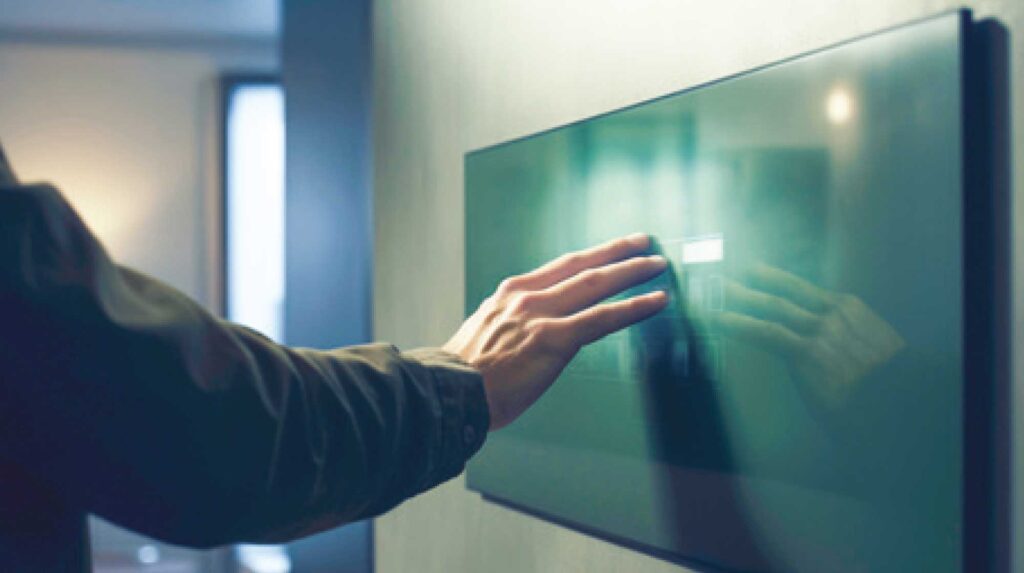
An average touch LCD screen is mainly composed of three main layers: Protective glass, touchpad and screen panel. The screens produced by the traditional frame bonding method leave some air gaps between the layers. Although this design is simple and costeffective, these air gaps can lead to light refraction and reduced screen quality.
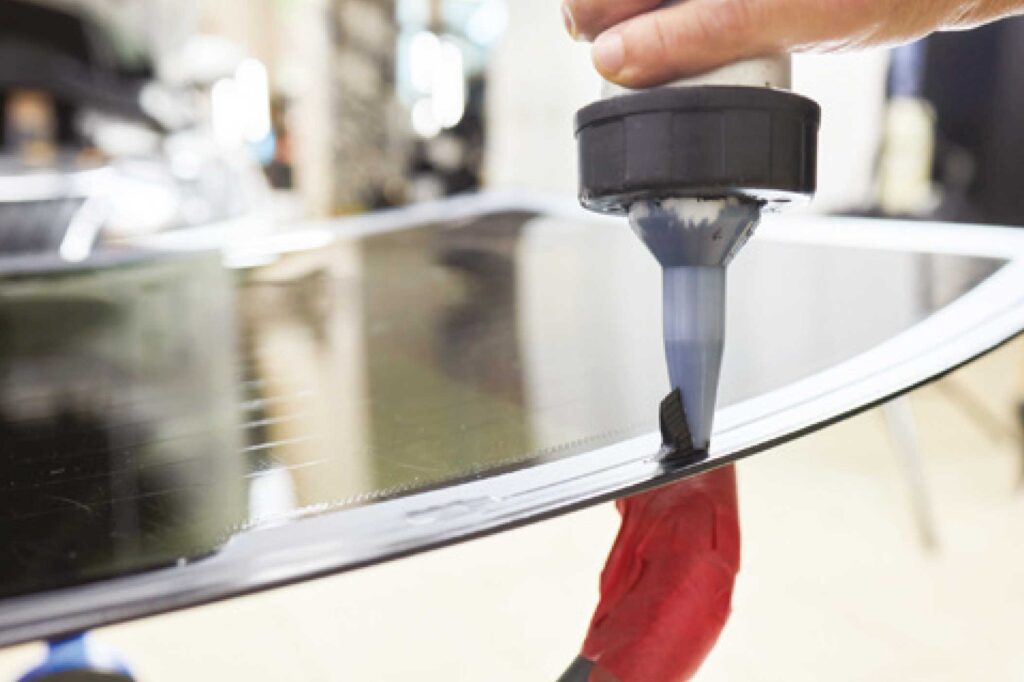
Çerçeve Yapıştırma: Geleneksel yöntem olan çerçeve yapıştırma, dokunmatik ekran ile panelin özel çift taraflı bant veya yapıştırıcı ile birleştirilmesi esasına dayanır. Bu katmanlar arasında hava boşlukları bırakır. Düşük maliyetli ve hızlı bir üretim yöntemi olsa da bu yöntemle üretilen ekranların toz girişine açık ve hava boşluğunun ışık kırılmasına sebep olması görüntü kalitesini olumsuz etkileyebilir.
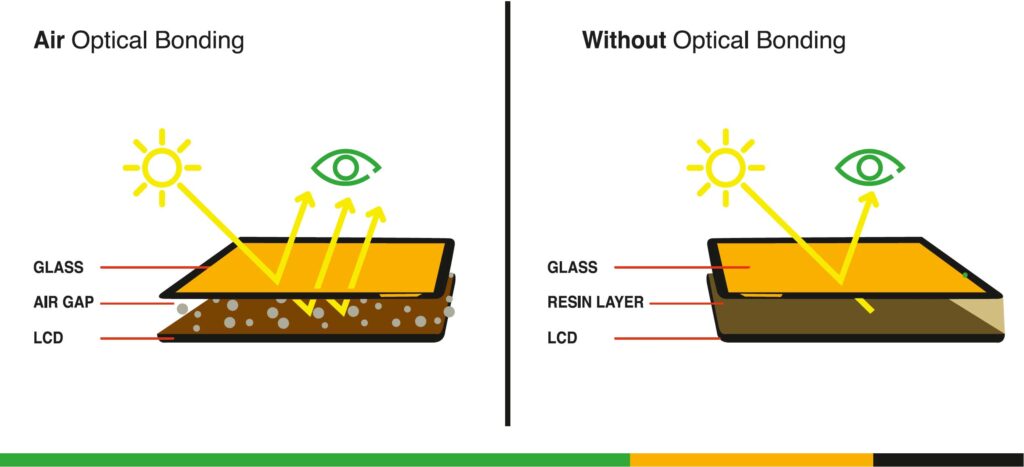
Frame Bonding: Frame bonding, which is the traditional method, is based on combining the touch screen and the panel with a special double-sided tape or adhesive. This leaves air gaps between the layers. Although it is a lowcost and fast production method, the screens produced with this method are open to dust ingress and the air gap causes light refraction, which can negatively affect the image quality.
Full Laminated: The full laminated method, which leaves no air gaps between the touch screen and the LCD panel, is especially preferred for premium devices. While offering thinner and lighter screens, they also reduce light reflections, offer full protection against dust, and provide a clear image even in challenging environments such as insulation and sunlight. However, the production of this method is more complicated and costly.
FULL LAMINATED BONDING TECHNOLOGIES FOR CAPACITIVE SCREENS
Innovative approaches to touch screen designs not only improve the visual quality, but also take the functionality of devices to the next level.
OGS (One Glass Solution): It is currently the main solution used in fully laminated LCD capacitive touch screens. It combines the touch layer and the protective glass layer, covers the ITO (Indium Tin Oxide) conductive layer on the inner side of the protective glass, and applies
the coating and lithography directly on the protective glass, which is made of a piece of glass and saves on lamination, making the LCD
touch screen thinner and lighter and reducing the overall cost further.
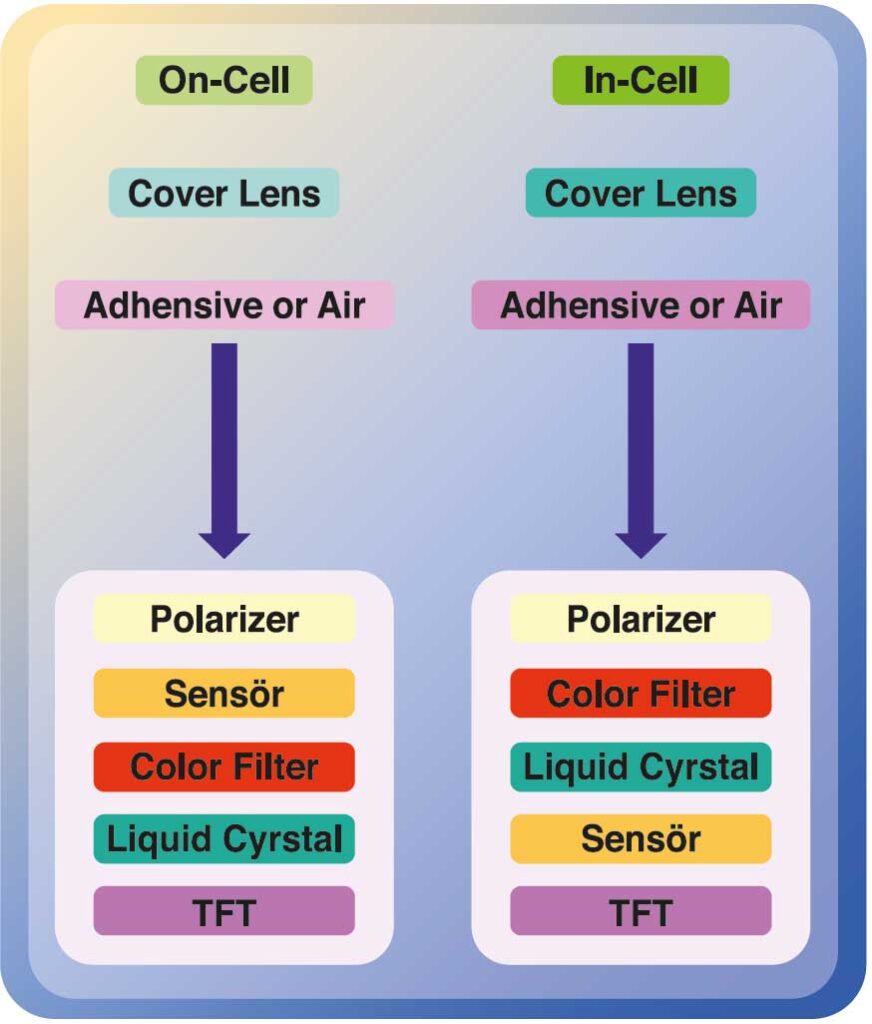
In-Cell Technology: This is the method of placing the touch panel function on the LCD pixels, i.e. placing the touch sensor function inside the screen. Incell places the ITO touch film under the upper glass substrate of the display panel, which is infused with the liquid crystal layer. The innovation of the in-cell touch panel is that it loads circuits into liquid crystal. This is a technology that gives the LCD screen the detection and touching input ability of the traditional touch screen. The in-cell touch panel is not only more accurate, but also eliminates the need for a touch panel, which makes the entire touch screen even thinner and lighter. A traditional touch screen is more difficult to see/read the screen clearly under sunlight. In this technology, on the other hand, there is no parallax and the readability has been improved as there is no touch panel.
On-Cell Technology: They are CD panels, which are produced by combining the Cover Glass on the screen with the Touch sensor and
placing them on top of the LCD cell layer. The fact that it is structurally a little simpler than In-cell brings some technical difficulties. The
technology used in some Amoled panel products brings with them some issues such as lack of touch fineness or the colors being not
homogeneous.
WHAT WILL THE FUTURE OFFER US?
While full laminated screens continue to become a standard in touch technologies, they play a major role in improving the visual quality and durability of devices. On the other hand, technologies such as In-Cell and On-Cell are becoming one of the industry’s primary preferences, by offering more compact designs and superior interaction features. These technologies are expected not to be limited to mobile devices only, and become widespread in other fields such as automotive, industrial control systems and healthcare devices. These innovations, which focus on the user experience, redefine our interaction with technological devices.
