



Artificial intelligence (AI) has become one of the most important innovations of modern technology and continues to revolutionize almost every industry today. However, in order that the artificial intelligence achieve such advances, it requires powerful semiconductor solutions running in the background. The semiconductor industry is providing the computing power needed by AI applications with suitable microchips, processors and other integrated circuits. The intersection of AI and semiconductor technology is playing an essential role in the development of next-generation devices, software and services.
In this article, we will discuss in detail the use of artificial intelligence in the semiconductor sector. We will also examine how AI has played a transformative role from chip design to manufacturing, or testing processes to the development of innovative semiconductor products.
The Effects of Artificial Intelligence on the Semiconductor Industry
Before moving on to how artificial intelligence is used in the semiconductor industry, it is important to understand why these two sectors are so interdependent. Artificial intelligence applications require high computational power to process and analyze huge amounts of data. High-performance computing is provided by powerful semiconductor components such as graphics processors (GPUs), application-specific integrated circuits (ASICs), programmable logic circuits (FPGAs) and advanced memory solutions.
Chip Design and Production
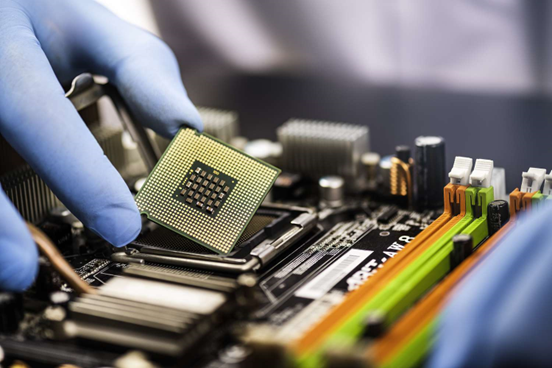
Artificial intelligence has become an important “assistant” in the design processes of semiconductors. Conventional semiconductor design processes are extremely complex and time-consuming. In particular, electrical design automation (EDA) tools play an essential role in the planning and development of chips. When AI is started to be used in these processes, it allows design processes to be accelerated and optimization to be further improved.
Artificial intelligence analyzes data from past chip designs, helping designers make the best decisions. AI can also be used in automated error detection and correction processes, which speeds up the development process by minimizing design errors. For AI chips with high complexity, faster and more effective designs can be achieved with solutions offered by AI algorithms.
AI is used not only at the design stage, but also in chip manufacturing processes. The semiconductor manufacturing process usually takes several weeks, and the error rate during this process can be high. Artificial intelligence algorithms monitor every step in the manufacturing process, reducing material waste and improving quality control and overall production efficiency.
High-Performance AI Chips
AI applications have increased the need for graphics processors (GPUs) that can perform more parallel processing than CPUs, and the special chips optimized to run AI algorithms. In particular, chips that can process large data sets, support applications such as machine/deep learning, form the heart of AI. In this context, AI accelerators such as Google’s Tensor Processing Unit (TPU) or Nvidia’s GPUs have led to major innovations in the industry.
AI accelerator chips are rapidly becoming widespread, especially in industries such as autonomous vehicles, Internet of things (IoT) devices, medical imaging and financial analysis. While AI is expected to find an even wider range of applications in the future, the semiconductor manufacturers are also continuing to develop a new generation of specialized chips to respond to this demand for AI.
Testing and Verification Processes Developed with Artificial Intelligence
Semiconductor chips are complex in structure and undergo intensive testing processes during production to ensure that they work flawlessly. However, conventional testing methods can be time-consuming and costly. Artificial intelligence offers an important opportunity to speed up these testing processes.
AI can detect possible errors and bottlenecks of chips during the post-production testing phase and diagnose problems in the production process early. This ensures that the chips are operating at their highest efficiency, before reaching the end users. The biggest advantage that AI offers in this process is that it allows the tests to be continuously optimized. AI algorithms can develop smarter and more efficient testing methods, by analyzing the results from previous testing processes.
AI and the Future of Semiconductors: Gen AI Chips
By 2024 and beyond, semiconductors specially designed for artificial intelligence will be at the epicenter of the technology. According to Deloitte Global, artificial intelligence accelerator chips are expected to grow at an annual rate of 18%, which indicates a growth five times faster than semiconductors used for applications other than AI. It is expected that the artificial intelligence chips sales will reach to $400B by 2027.
Artificial intelligence chips, called Gen AI, aim to offer a performance beyond that of existing chips. These chips are designed to optimize not only for data processing, but also for the capacity of autonomous decision-making, language processing and learning of artificial intelligence models. Gen AI chips have the potential to revolutionize many industries, from autonomous vehicles to smart home devices.
The Talent Crisis for AI in the Semiconductor Industry
With the spread of AI in the semiconductor industry, a serious talent crisis is also emerging. Big technology companies such as Google, Amazon, Apple are increasing their demand for talents in this field to develop their own AI chips. This makes it difficult for chip manufacturers to find specialized talents both in the field of AI and in semiconductor design.
The limited number of talents specializing in AI and semiconductors may also affect innovation processes in this area. Semiconductor companies should invest more and focus on special training programs to close the talent gap and remain competitive in this rapidly developing market.
Result
Artificial intelligence is bringing revolutionary innovations to the semiconductor industry. The advantages offered by AI at every stage, from chip design to production and testing processes, make the industry more efficient, faster and competitive. While high-performance AI chips and accelerators are empowering the industrial processes, consumer devices and even autonomous systems, the data processing power of AI is also creating new opportunities for the semiconductor industry.
In the coming years, the synergy between the semiconductor industry and AI will deepen further. While the growth of these two sectors combined shapes the future of technology, artificial intelligence-powered semiconductors will continue to play even a bigger role than ever.
The intersection of artificial intelligence (AI) and semiconductor technology is opening the door for impressive innovations in many sectors. Here are some current examples of AI combining with semiconductors:
AI Processors and Graphics Processing Units (GPUs)
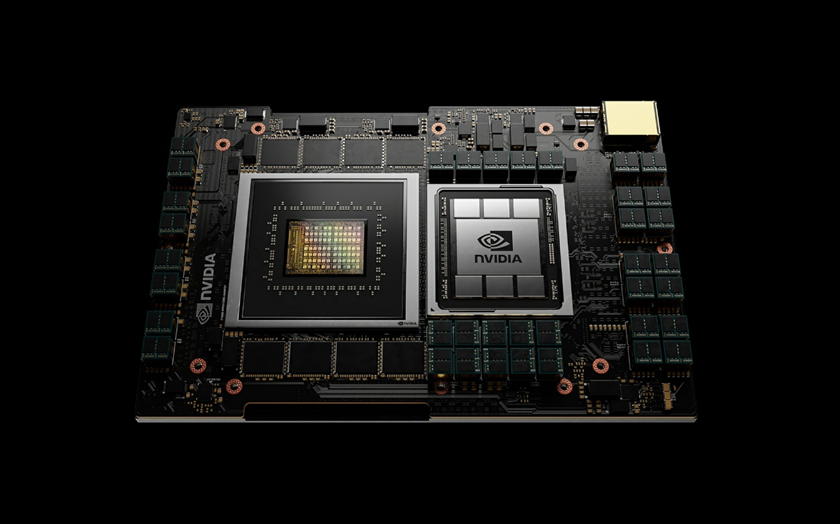
- Nvidia: Nvidia is a global pioneer in the use of graphics processing units (GPUs) in AI applications. GPUs are ideal for AI applications that require parallel processing, such as deep learning and machine learning. Nvidia’s A100 Tensor Core GPU, is an example optimized for AI workloads. These chips are being used to train complex AI models on large datasets.
- Google Tensor Processing Unit (TPU): Google stands out with its Tensor Processing Unit (TPU) that it has designed for artificial intelligence calculations. TPUs were developed in order to speed up Google’s artificial intelligence algorithms and consume less energy. TPUs are particularly used in specific services such as Google Translate, Google Photos and Google Search.
AI-Based Semiconductors in Autonomous Vehicles
- Tesla: The use of artificial intelligence in autonomous vehicle technology is growing rapidly, and Tesla has developed its own FSD (Full Self-Driving) chips, one of the milestones in this process. Tesla uses special AI processors for its vehicles to make decisions on their own by sensing the current environment. These chips enable autonomous driving capability, by processing large data sets collected during driving in real time.
- Mobileye: Mobileye, owned by Intel, combines AI and semiconductor technology for autonomous driving. The company’s AI-powered processors create suitable decision-making mechanisms for driverless vehicles by processing data from sensors. These systems analyze environmental data to ensure the safe movement of the vehicle.
Advanced Healthcare Services with AI
- IBM Watson Health: IBM, integrating artificial intelligence into the healthcare sector, is able to analyze huge amounts of medical data thanks to semiconductor technology. The AI systems such as IBM Watson are performing big data analytics using AI accelerator chips for cancer diagnosis, genetic analysis and treatment recommendations. In these processes, semiconductors enable AI to work faster and more efficiently.
- Medtronic: Medtronic, producing healthcare solutions such as artificial pancreas by combining AI and semiconductor technologies, has developed a system that automatically adjusts insulin doses by constantly monitoring the glucose levels of diabetes patients. With its specific AI algorithms, this system constantly analyzes the data in the body and provides fast feedback with semiconductor chips.
Consumer Devices Powered by AI
- • Apple Neural Engine: Apple has designed Neural Engine, a special AI processor to make artificial intelligence calculations more efficient. This chip is integrated into iPhone and iPad devices in order to speed up AI-based operations such as face recognition (Face ID), photo editing, augmented reality (Dec), as well as Siri to respond faster.
- • Amazon Alexa: Amazon’s voice assistant Alexa uses AI-powered semiconductor processors for controlling Internet of Things (IoT) devices. These chips allow Alexa to quickly detect commands, process them and provide corresponding feedback. AI algorithms inside the device optimize natural language processing and voice recognition technologies.
Energy Efficiency and IoT with AI
- Edge AI Chips: Semiconductor companies that develop AI solutions for smart home devices, sensors and other IoT (Internet of Things) devices are designing chips with high energy efficiency. For instance, the Snapdragon processors developed by Qualcomm are used to carry out AI operations on smartphones and IoT devices with low energy consumption. These chips allow, for instance, a smart camera to instantly process images and detect possible security threats.
- ARM Processors: ARM’s AI-oriented Cortex-M processors are designed for low-power IoT devices. These chips help Internet of Things devices make AI-powered decisions and react quickly, while also keeping energy consumption to a minimum.
Accelerated Production and Testing Processes with AI
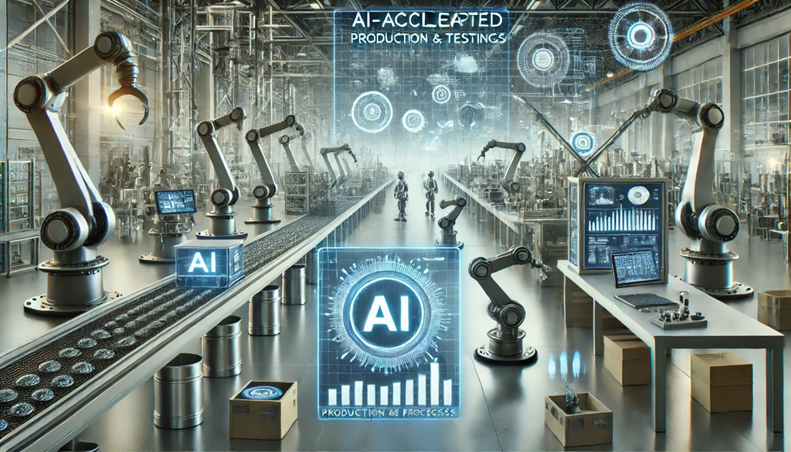
- Production Automation with Intel AI: Intel is using AI to optimize semiconductor manufacturing processes. AI algorithms track manufacturing processes in factories, detect errors at an early stage and increase productivity by optimizing processes. These AI-powered solutions are used to minimize errors, particularly in wafer manufacturing.
- Semiconductor Tests with AI: The post-manufacture testing processes of semiconductor chips can be time-consuming and complex. Artificial intelligence is able to detect possible errors at an earlier stage, by speeding up chip tests. The EDA (Electrical Design Automation) companies like Cadence and Synopsys enable faster and more reliable results by integrating artificial intelligence algorithms into semiconductor testing and verification processes.
AI-Powered Robotics and Industrial Automation

- ABB Robots: Operating in industrial automation and robotics field, ABB enables robots to work smarter and more efficiently, by using semiconductor solutions supported by artificial intelligence. AI algorithms help robots to react quickly to current environmental conditions and optimize processes.
- AI and 5G Semiconductors: AI is also growing rapidly with the development of 5G. The wider bandwidth and lower latency of 5G improve the interoperability of artificial intelligence devices. Qualcomm is developing semiconductor solutions for AI and 5G integration, and these chips are becoming increasingly more important for smart cities, autonomous vehicles and industrial automation systems.
