


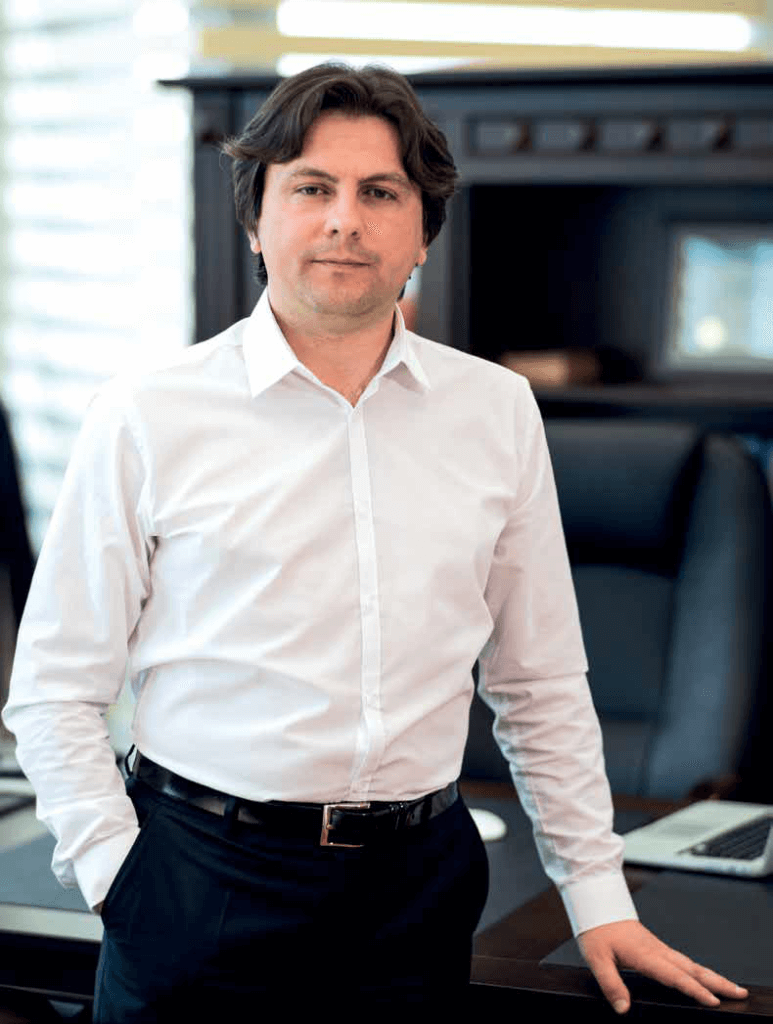
Istanbul Technocity contributes to Türkiye’s innovation know-how with its innovative companies. This Technocity, which has created an ecosystem suitable for R&D-oriented activities, brings together domestic and foreign companies operating in the field of advanced technology. We met with Yasin Erol, General Manager of Istanbul Technocity, and talked about their activities.
Can you tell us a bit about your technocity?
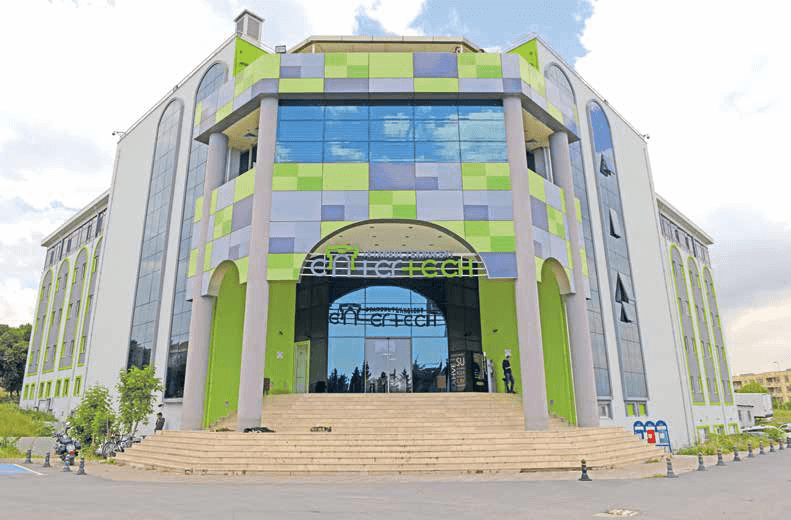
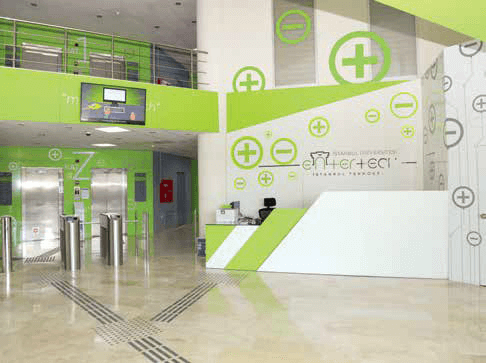
Our technocity, built on an area of 40 acres at Avcilar Campus of Istanbul University, started its activities in 2012. We employ 1018 people, 872 of which are R&D personnel, in an indoor area of 16k m2.
What are your priorities as a technocity?
The importance of R&D and innovation activities is increasing globally. These activities are also important in terms of affecting economic growth and development performance. Countries are now taking their positions and differentiating from their rivals in both global and regional competition, with the know-how they produce and the technologies they develop. At Istanbul Technocity ENTERTAIN, one of our main priorities is to carry out several activities to contribute to the development of Türkiye. In line with this, Research and Development (R&D) Activities and Innovation, Entrepreneurship, University–Industry Cooperation and Globalization are our main priorities.
What does entrepreneurship mean to you, and what role does it play in development?
Many studies have shown that entrepreneurship, which is defined as developing an innovation and starting a change rather than only launching a business, is an important factor for development. Entrepreneurship plays a key role in the emergence, implementation and dissemination of innovations, as well as formation of new sectors. In today’s world, where both consumer demands and technology are changing and developing rapidly, those who aim to be pioneers in development also have to be pioneers in innovation. Entrepreneurship, which accelerates economic development, supports the formation of new employment areas and increase of production. Entrepreneurs who create new products by using limited resources more effectively also contribute to the formation of high added value.
“The importance of R&D and innovation activities is increasing globally. “These activities are also important in terms of affecting economic growth and development performance.”
So what are the obstacles to entrepreneurship in our country?
The basic problems faced by entrepreneurship in our country are lack of education of entrepreneurs in significant subject matters such as marketing and management, the inability to verify business ideas, and the lack of knowledge and vision for entrepreneurship. In order to eliminate these issues, the business idea owners should be included in the entrepreneurial ecosystem, to make it possible to see the strengths and weaknesses of such ideas and create effective solutions accordingly. In addition, entrepreneurs are expected to gain skills, such as being able to determine the value of their business ideas in Türkiye and around the world.
Istanbul University Technocity is one of the implementing organizations of Tubitak’s Individual Young Entrepreneurship Program (BIGGIST). What does this program offer to entrepreneurs?

Within the scope of the BIGGIST project, appropriate training and mentoring support will be provided to new business idea owners for testing their business ideas and conduct market analysis for the products to be developed. Also, consulting and training services will be provided at every stage of the activities that need to be carried out during transforming their business ideas into tangible products. With BIGGIST, which is considered the continuation of the entrepreneurial culture created by Istanbul Technocity, we are trying to create model mechanisms that will feed entrepreneurial activities that reveal R&D and innovation activities. We aim to complete the process successfully and contribute to creation of economic value for Marmara Region in particular and our country in general, with commercialized products. In the long term, on the other hand, we want to increase the competitiveness and efficiency of Turkish industry and contribute to its transformation into a structure where high-value-added and advanced technology products are produced, to receive a greater share in global export activities.

Which areas do the companies located in the technocity mainly operate in?
At Istanbul Technocity, as in other technocities in Türkiye, we host a large proportion (56 percent) of software – IT companies. We aim to keep the range of companies in our structure as wide as possible. As for other sectors that stand out mainly… There are innovative companies operating in biotechnology, health, medical, electrical and electronics, chemistry, advanced material and other technological fields.
“Entrepreneurship plays a key role in the emergence, implementation and dissemination of innovations, as well as formation of new sectors.”
The number of technocities is increasing daily. What do you attribute this to?
Technocities in the world began operating in 1951 with the Stanford Research Park in Silicon Valley. In our country, on the other hand, at the beginning of the 1990s, studies on technology centers began within the scope of a cooperation between KOSGEB and universities. In 2001, technology development zones (TDZ) were defined comprehensively and serious steps were started to be taken. This 50 years gap is a long period, especially for technology field. However, we have taken important steps in the field of TDZs in the last 15 years with the enforcement of the Regulation on Technology Zones. Currently, 81 TDZs have been established in 52 cities, 56 of which are active. Especially with the recent government incentives for R&D, the demand for TDZs is increasing.
What are the contributions of technology development zones?
In TDZs, the focus is mainly on the services and products that our country needs, have export potential and high added value. In other words, our TDZs play a major role in the development of our country. In order for TDZs to function at the desired level, particularly the mentoring services required by newly established companies (financial, academic, etc.) needs to be maintained even more effectively. Also, it is highly important for entrepreneurs to act as an interface at the point of access to the sources of funds they need. For many entrepreneurs, especially young ones, expanding into foreign markets is more of a dream than a realistic goal. At this point, technocities should act as a stepping stone for the companies at TDZs to open to foreign markets and make their mark in the international arena.
