


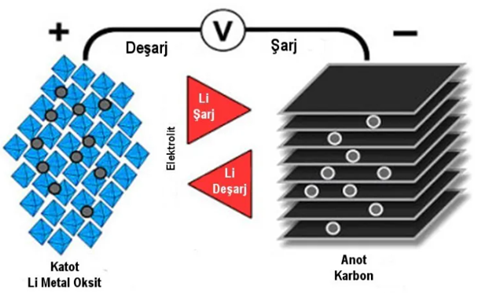
Lithium-ion (Li-ion) batteries are one of the most widely used types of rechargeable batteries today and have also become one of the most critical elements of energy storage technology. Their advantages, such as high energy density, long life, light weight, low maintenance requirements etc., make them widely used in smartphones, laptops, electric vehicles and renewable energy systems.
Characteristics of Lithium-Ion Batteries
- High Energy Density: They can store more energy than other battery technologies of the same size. This allows electric vehicles and portable electronic devices to operate for a longer time.
- Lighter and More Compact Structure: Lithium-ion batteries save space, especially in portable devices, and make the products lighter.
- Low Self-Discharge Rate: Lithium-ion batteries are more stable in terms of energy loss when not in use, compared to those of other rechargeable batteries.
- Long Cycle Life: When used correctly and properly, they can withstand thousands of charge-discharge cycles, making them suitable for long-term use.
Areas of Use of Lithium-Ion Batteries
- Mobile Electronic Devices: Smartphones, tablets, laptops, smart watches and wearable technologies.
- Electric Vehicles: Electric cars, electric motorcycles/scooters, hybrid vehicles.
- Renewable Energy Storage: Solar energy systems, wind energy systems, home energy storage systems.
- Electrical Appliances and Devices: Rechargeable vacuum cleaners, drills, drones, RC vehicles.
- Medical Sector: Medical devices, portable medical devices.
- Aerospace Industry: Spacecrafts, electric aircrafts and unmanned aerial vehicles.
- Telecommunication and Backup Power Systems: Data centers, telecommunications equipment.
- Marine and Underwater Applications: Electric marine vehicles, diving equipment.
- Military Applications: Military vehicles, portable communication and surveillance devices.
- Smart City Applications: Smart city lighting, energy storage facilities.
- Robotic Systems: Industrial robots, service robots.
Disadvantages
- Raw Material Shortage: The supply of critical raw materials used in the manufacturing of lithium-ion batteries, such as lithium, cobalt and nickel, may become difficult over time. Therefore, studies on the use of alternative materials have gained a strong momentum.
- Security Risks: Lithium-ion batteries carry a risk of fire or explosion when mishandled, misused or damaged. In order to reduce such risks, the development of security protocols and alternative designs are being studied on.
- High Production Cost: Materials such as lithium, cobalt, nickel used in lithium-ion batteries are expensive and limited resources. This increases costs, especially in large-scale energy storage projects and electric vehicles.
- Limited Cycle Life: Lithium-ion batteries can offer thousands of charge-discharge cycles, but their overall capacity decreases over time. The energy storage capacity of the battery decreases in time, and it must be replaced when its service life expires. This can limit the overall life of the device and can be costly in the long run.
- Recycling Challenges: Recycling lithium-ion batteries is a complex and costly process. Various chemical components in the structure of batteries make it difficult to recycle safely. Recycling rates are still at a low level, and most of the valuable materials used cannot be recovered.
- Low Energy Density Development: The energy density of lithium-ion batteries has remained at a certain limit. Higher energy densities are still needed for applications such as electric vehicles and large-scale energy storage systems. Researches conducted for more advanced battery technologies suggest that new technologies can replace lithium-ion batteries that are approaching this limit.
- Performance Issues: Lithium-ion batteries experience a decrease in performance at low temperatures. In cold environments, the energy capacity of batteries may decrease, while the charging times increase. This is a negative factor, especially for EVs and outdoor equipment.
Although lithium-ion batteries are currently in a dominant position in energy storage technology, the researches on new technologies and materials suggest that alternatives that can replace these batteries may emerge in the near future. These new generation battery technologies aim to overcome some of the limitations of lithium-ion batteries, by providing several advantages.
Technologies That Can Replace Lithium-Ion Batteries
1. Solid-State Batteries
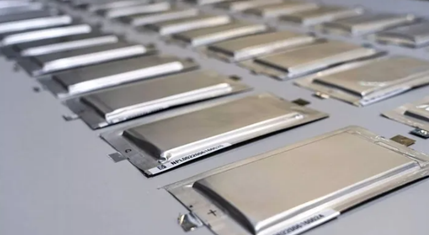
- Features: Solid-state batteries use a solid electrolyte instead of the liquid electrolyte in lithium-ion batteries. This design provides higher energy density, faster charging times and better safety.
- Advantages: It significantly reduces the risk of explosion and fire, has a long service life and can be more compact.
- Future Potential: It may be revolutionary, especially for electric vehicles. Many leading automakers and technology companies are working on solid-state battery technology. However, the current manufacturing costs are quite high.
2. Lithium-Sulfur Batteries
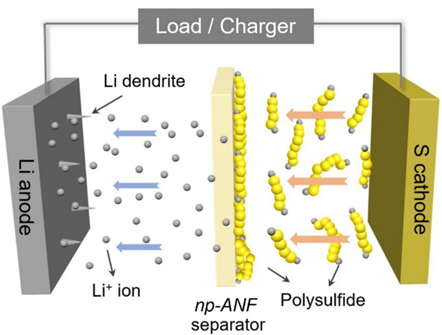
- Features: Lithium-sulfur batteries have a higher energy density than lithium-ion batteries. Sulfur is an abundant and low-cost material, meaning that these batteries can offer a cost advantage.
- Advantages: They are lighter than lithium-ion batteries and provide a higher energy density. In addition, manufacturing costs are lower.
- Challenges: The cycle life is not as long as lithium-ion batteries. Although it is not widely used commercially at the moment, it is an emerging technology.
3. Lithium-Air Batteries
- Features: Lithium-air batteries produce energy by using oxygen in the air via chemical reactions, and they can offer a very high energy density.
- Advantages: Theoretically, their energy storage capacity may be 5-10 times greater than lithium-ion batteries.
- Challenges: There are significant technical obstacles that need to be removed in order to move to commercial applications. Material durability is not sufficient yet, especially for the control of reactions and long-lasting use.
4. Sodium-Ion Batteries
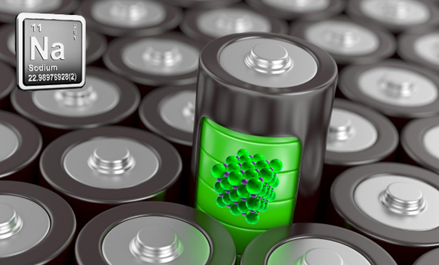
- Features: Sodium-ion batteries use sodium instead of lithium. Sodium is a more abundant and cheaper element in nature than lithium.
- Advantages: The cost of sodium-ion batteries can be lower than that of lithium-ion batteries, making them an ideal option especially for large-scale energy storage applications.
- Challenges: The energy density of sodium-ion batteries is lower than that of lithium-ion batteries. However, it is believed that these batteries will develop so much that they will be able to compete with lithium-ion batteries in the near future.
5. Graphene-Based Batteries
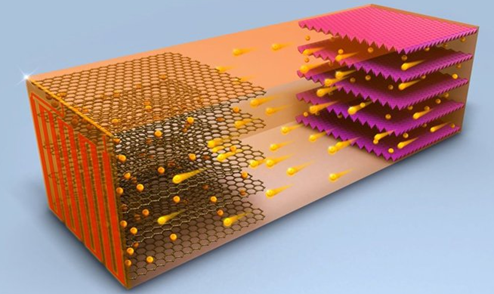
- Features: Graphene is an extremely thin material composed of carbon atoms and has a high conductivity. Graphene-based batteries can be charged much faster than lithium-ion batteries.
- Advantages: Shorter charging times, longer service life and higher energy density. Also, the heating problems are much less, improving the overall safety.
- Challenges: Manufacturing costs are high for now; however, if this technology is developed further, it may revolutionize electronic devices.
6. Zinc-Air Batteries
- Features: Zinc-air batteries generate energy using oxygen and are usually disposable batteries. However, the development process for rechargeable versions is still in progress.
- Advantages: Since zinc is an abundant material, the cost of these batteries is low. They also have a potential for high energy density.
- Challenges: There are several technical challenges for rechargeable versions. It may be an attractive option for EVs and large-scale energy storage.
7. Silicon-Anode Batteries
- Features: By using silicon instead of the graphite anode in lithium-ion batteries, the energy density of the battery may be increased.
- Advantages: It can significantly increase the energy density compared to conventional lithium-ion batteries, which means longer use times.
- Challenges: The volume changes in the silicon anode can shorten the service life of the battery and pose safety risks. Researches are still in progress to overcome this issue.
The technologies that can replace lithium-ion batteries, although currently under development, have the potential to revolutionize the world of energy storage. These new battery technologies can stand out in many applications, from electric vehicles to portable devices, or to large-scale energy storage. Solid-state batteries, sodium-ion batteries, lithium-sulfur batteries, and other alternatives are important candidates for overcoming the limitations of lithium-ion batteries in terms of cost, safety, and performance.
