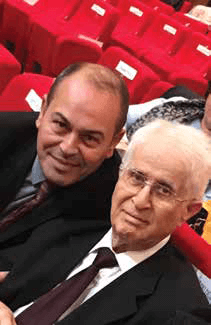
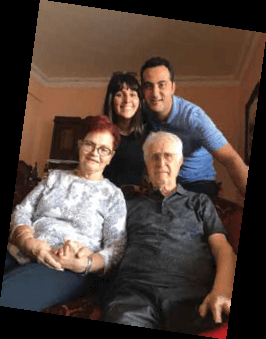
How Nice To Love You… Ah, How Nice, How Nice….
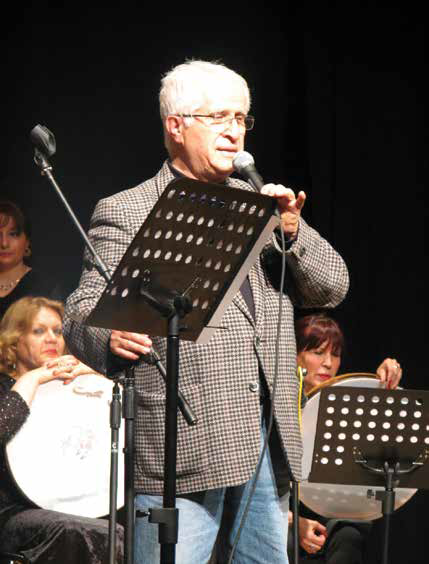
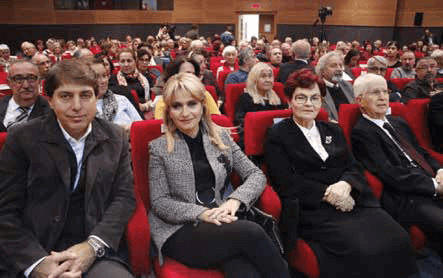
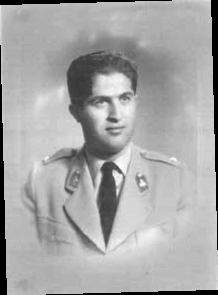
Retired Lieutenant Colonel and Composer Gundogdu Duran, who devoted his years to music and poetry, wrote numerous unforgettable lyrics and compositions, and left her mark on any era with his master works such as Ankara Ruzgarı, Gozleri Askla Gülen and Kara Sevda, passed away on Monday morning, June 14, 2021, at his 85.
The traces of the compositions of Gundogdu Duran, one of the masters of Turkish music, are in fact very deep. While we showered compliments on our beloved person in some of his songs, we also reproached them in some others. Gundogdu started his composing career by composing the song “Ankara Ruzgari” in “muhayyer kurdi” theme, which was first sang by Kutlu Payasli on Ankara Radio in 1964, and Nesrin Sipahi in her 45s in the same year. Same year, his second song, “Gozleri Aska Gulen”, one of the songs that almost everyone knows and describes their lover most beautifully with the lyrics, entered the Turkish art music repertoire. The lyrics and music of this song in “Nihavent” theme also belonged to Gundogdu Duran. In 1959, the famous composer composed his song “Kara Sevda” in “muhayyer kurdi” theme.
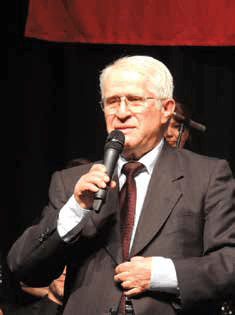
A Musical Journey That Began With a Violin That the Teacher Bought
Born on May 27, 1937 in the Taskale village of Karaman, Gundogdu Duran attended elementary school in Beysehir, and middle and high school in Konya High School. He graduated from the history department of Ankara Language and History-Geography Faculty in 1961. Since he was a military student at the faculty, he worked as a history teacher at the NCO schools in Mersin, Konya and Cankiri, starting from the 1961-62 academic year. In 1980, while he was a Lieutenant Colonel, he voluntarily retired from Kuleli Military High School. Gundogdu Duran has described his musical journey with these words: “It was the first day I started secondary school in Konya. The music teacher came in. He asked questions to everyone in the class and made them sing songs. Initially no one has understood, but our teacher was actually testing if we had an ear for music. I realized much later that he did this without making anyone feel it. He chose a group of students, including me. A few days later, he put a violin in my hand. He understood that I could play the violin. He even embezzled that violin to me, by making me sign a written paper. I continued my studies with that violin until the end of May, as a courtesy of my teacher. Before the holiday started, my teacher bought me a violin that he bought with his own money. That was the day my life was changed. My father then paid the teacher for that violin. It was great that my father supported my musical studies. But the following year, when my teacher was appointed to another school in Istanbul, my chance to study music almost disappeared. In 1955, when I graduated from high school, I could now play the violin enough to win the admiration of people around me. I was grateful to my late teacher Arif Sahap Oktem, who introduced music into my life.” Gundogdu Duran’s family was also interested in music. There were many people in his mother’s family who played lute (oud) and violin. His father, Mustafa Duran, was a teacher who played lute (oud), was also interested in literature and trained many students with his expanded knowledge. Duran’s becoming a name that made a mark on Turkish music started with such a journey. Gundogdu Duran, has listed in an interview his advices to young composers as follows: First of all, they should be in constant dialog with strong, knowledgeable and experienced artists and musicians and act according to their recommendations. They should create a music library in their homes and collect valuable works, information and documents written on this subject. They should learn Turkish literature, Turkish poetry and the peculiarities and subtleties of vezin, rhyme, verse forms by acquiring them from the works of poets and literati who have left valuable works on this subject. By studying the works of great composers from a technical point of view, they should understand why these sound works are powerful, and take them as an example for their own work. They should also take part in important music events. They should work together by forming teams and groups with their friends who work for the same purpose. Of course, they should also study the biographies of great composers and artists.
“In 1959, the famous composer Gundogdu Duran composed his song “Kara Sevda” in “muhayyer kurdi” theme.”