


ELECTRONIC BOARDS MANAGER
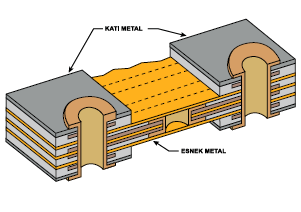
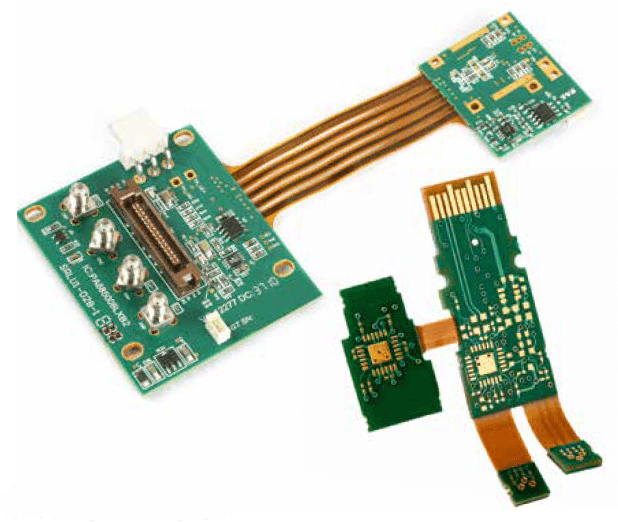
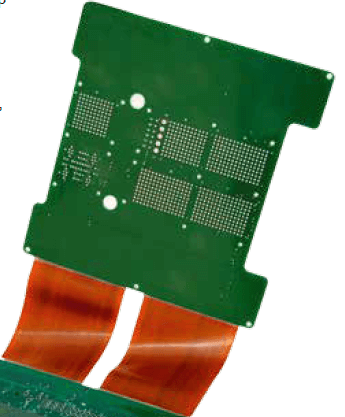
Rigid-Flex PCBs are complex circuits with a mixed structure that consist of solid and flexible layers combined in a single structure. Rigid-Flex circuits consist of two or more conductive layers containing flexible or solid insulation materials between each layer. Rigid-Flex PCBs should not be confused with regular Flex PCBs. Flex PCBs are simply flexible circuits. Rigid-Flex PCBs, on the other hand, are circuits with both rigid and flexible properties that allow designers to combine a large number of interconnected circuits into a single board. If you need to connect your PCBs electrically in various positions and directions, the Rigid-Flex structures will be the ideal solution. The sections that require extra support can be made rigid, while the corners and areas that require extra space can be made flexible.
The main advantages:
1- No need for connectors and similar additional components
2- Improved signal transmission by eliminating cross sections
3- Weight reduction
5- Simple installation
6- Reduction of solder connections
7- Combination with HDI technologies (microvias, embedded vias)
8- Combination with cooler technologies
9- Dynamically and mechanically robust
10- Resistance to high temperatures
11- Freedom for 3D design, etc.
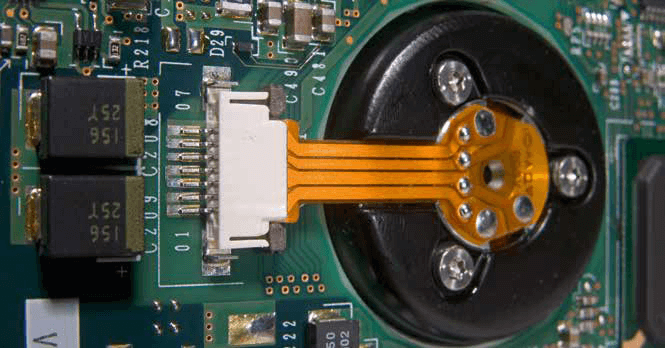
“If you need to connect your PCBs electrically in various positions and directions,
the Rigid-Flex structures will be the ideal solution.”
Designing and manufacturing Rigid-Flex PCBs is more costly than conventional rigid PCBs, but they offer a number of significant advantages. The most important disadvantage of Rigid-Flex cards is that it is difficult to repair a damaged circuit, and the associated costs are high. Standard PCBs are usually more affordable than flexible circuits. We said “usually”, as the flexible PCBs have some fields of applications that can be cheaper than standard PCBs when the total cost of ownership is taken into account.
Standard PCBs may seem cost-effective at first, but when a flexible circuit is used we can eliminate components such as wiring harnesses and other circuits. When we remove these components from a design, the material cost, labor, assembly cost and scrap costs will also be eliminated, helping to reduce the overall cost of the design. For this, it is essential to calculate and compare the costs at early stages. Today, Rigid-Flex PCBs are widely used in medical applications, aerospace industry, automotive applications, as well as other challenging applications where flexibility is a must.
