Base Materials Used in PCB Production and Their Properties

PCB ELECTRONIC CARD MANAGER
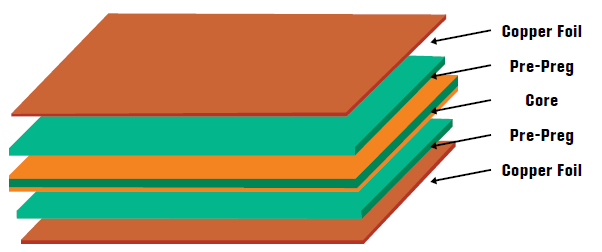
Used in the production of printed circuit boards (PCBs), the base material consists of a copper-coated composite structure. The main materials of this composite structure, which is called “Base Material” and whose details are given in the IPC document IPC-4101, are mainly paper, glass and epoxy. On the other hand, several other names have also been given based on the type and rate of use of these substances. The most popular ones are FR2, FR4, CEM1,CEM3 and Aluminum. There are also variants such as FR1, FR5, G10, CRM-5, GPY. While the most commonly used base material brands are Kingboard (KB), Nanya, Goldenmax, Rogers, Panasonic, Isola and Argon, there are also many other brands. These materials are classified according to some fields of use, based on their chemical, physical, thermal and electrical properties. For instance, while KB, Nanya and Goldenmax brands are used in the manufacturing of general industrial boards, brands such as Argon, Rogers, Panasonic and Isola are preferred in the manufacturing of HDI-enabled boards. Global quality and safety standards such as ISO, UL, VDE, RoHS, Reach are sought as criteria for the material manufacturer. Also, there are some manufacturers that can provide “IATF quality standard”, which is actually an automotive industry standard.
Storage Standards in Transportation and Storage

As for the storage conditions of the base material during transportation and storage, it will be appropriate to provide an average temperature of 50°C and a humidity below 85%. Moisture causes delamination, which is actually the blistering of the base material. The printed circuit board manufacturers carry out moisture and insulation resistance tests in accordance with IPCTM-650 Method 2.6.3. However, the manufacturer should also pay attention to the product’s shelf life. In addition, the PCB whose production has been completed is vacuumed in to prevent moisture absorption, and a moisture bag is added to the vacuum. Before the PCBs are placed, preliminary tests should be performed, particularly on Flex and CEM1 boards, against the possibility of moisture absorption.
Tolerance in the Base Material
An average tolerance of +/- 10% in the manufacturing of the base material is deemed acceptable. The designer must take into account the tolerance at critical thicknesses. Standard copper thicknesses added to the base material start from 5 µm, while the thicknesses of up to 9 µm, 12 µm, 1/2 oz, 3/4 oz, 1 oz, 2 oz and 14 oz are also available. (1 oz=0.035 µm)
Now, let’s have a look at the base material in more detail:
FR 4
It is the most preferred material formed by a mixture of woven glass-wool and epoxy material with high electrical, thermal and physical performance. It is strong against bending, has a high strength, and is resistant to mechanical stress. It can work at high frequencies. With its low water absorbency, it can maintain its physical and electrical values in dry or humid conditions. Along with the stability of its thermal material and high temperature resistance, it has also the property of self-extinguishing. The dielectric strength, as well as the physical and electrical conditions required for the material’s character such as TG, TD and CTI should be determined at critical application sites.
It is suitable for single-sided, double-sided and multilayer PCB production. It is suitable for hole coatings. It is not suitable for molded production due to the strength of its material.
FR 2
It is a material with phenol-derived cellulosic paper in its structure. The cheapest base material preferred in the Turkish market is FR2. It is suitable for molded production. This also reduces the cost. It is not suitable for the in-hole process. It is used for single-sided PCBs. OSP coating is more suitable for surface coating. Although there are no restrictions, it can be used on general industrial boards that are not exposed to high heat.
CEM1
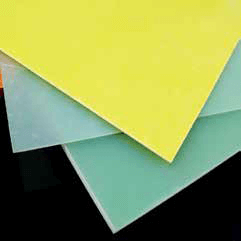
It is a material with cellulosic paper and epoxy in its structure. This cheap material is suitable for molded production. It has a smoother structure than FR2. It is not suitable for the in-hole process. It is suitable for single-layer production. OSP coating and HAL surface coating options are compatible with both leaded and unleaded production. In the market, it is generally known as a white material. It can be used in LED applications and single-layer general industrial boards.
ALUMINUM
It is physically more durable and long-lasting. It cools the circuit elements by providing cooling with its fast heat dissipation, and prolongs their life. Although it’s not suitable for in-hole process, double-layer aluminum PCB production can be made. It is mainly used in LED applications.
Ozdisan Elektronik continues to meet the general and special base material PCB requests of its customers via various suppliers.