


“If someone says that we should agree with what the majority agrees, you can be sure that it is useless. Because, first of all the ’true one’ is undoubtedly the rare one, and therefore it is possible for a person to be smarter than the majority.”
Sextus Empiricus, Outlines of Pyrrhonism, Book II, translation: Orsan K. Oymen, Philosophy in Seven Hills, Issue 2, Istanbul 2003, p.10

In a society, individuals may often live differences of opinion among themselves about a particular event or situation. For these differences of opinion, usually the side supported by the majority is expected to have a say, rightness, dominance, or priority. However, Empiricus rejected this ideology and stated that what is true is undoubtedly rare and that it is possible for a person to be smarter than the majority. We can look at this saying of Empiricus from different perspectives. For example, Nietzsche stated in “Thus Said Zarathustra” that it is possible for people to show resilience in response to the pressure exerted by the government to the middle-class and low-class. However, Nietzsche, who claimed that the people were not able to show resistance, declared himself a “superior person” as he himself was the only person who could resist the system. With Nietzsche’s expression, we can interpret Empiricus’s word from the following point of view: People living in the capitalist system prefer “the wrong one”, as they do not question that wrong despite the apparent material mistakes. According to Nietzsche, this has always been the case and most probably will continue to be so. Also, Zeki Demirkubuz, who reflected the 1930s in his movie adapted from Nahid Sırrı Orik’s novel “To Be Jealous”, associated the issues in Türkiye to the society by looking at them from an individual point of view. Moreover, Demirkubuz stated that the characters and personalities of people in the 1930s are the same with those in today’s Türkiye. Considering that both him and Nietzsche has lived in the 19th century, Nietzsche’s defense of the same view at that time leads us to the conclusion that Demirkubuz emerged as a search for a solution of goodness, worthiness, loyalty, and the fact that when we delve into the deepest concepts of order and power, we will reach the “real issues” at the core of human creation. From another point of view, Empiricus’s remark can be related to the fact that the character named Roquentin in Jean Paul Sartre’s novel “Nausea” suggests that the only difference from other people is only reading and reading. Also, when we go back to Empiricus’ saying again, we can expand the subject matter of “people not questioning” by associating it with people not reading. A similar result from the saying that appears in Jean Paul Sartre’s “Nausea” is experienced by the character Muharrem in Zeki Demirkubuz’s film “Underground”, a person who is quite different from his friends.

The most of the movie describes that Cevat, who was once called a fraudster in a group of friends, was given a meal by his friends who found out that he was going to Istanbul with the best novel award, and the meal organized on behalf of Cevat was called an ‘honor dinner’. However, everyone except Muharrem was friendly to Cevat at the meal, and Cevat and his friends left the meal collectively, disdaining him because Muharrem was a “minority”. As a result of these events that we see in this movie, the essence of behaviors of all these people is that they live as required by the system, follow their determined destiny, and see “loneliness” as a defeat and therefore try to crush the “lonely” individual. If we associate this with the capitalist system, it will not be wrong to remember the following remarks of Demirkubuz: “The first thing an oppressed person does when he gains power is to strangle another oppressed person.”[1]
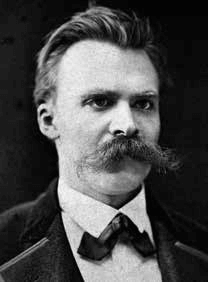
Karl Marx, on the other hand, adopted the belief that the modern world would crack and eventually collapse after a certain time, particularly for this reason. The first step that can cause this system to crack is nothing more than the need for people to use their immoralism when appropriate, just as Nietzsche said in “Thus Said Zarathustra” and Muharrem showed in the movie “Underground”. One comment that can be made about the third paragraph is that a person’s being smarter than the majority would only be realized by first accepting within himself that it is inevitable that he will be marginalized by society, just like the case in the movie “Underground”. Also, let’s remember the section in Albert Camus’s novel “The Stranger”, where the readers were asked the “real reason” for the trial while Meursault was being tried in court. Was Meursault being tried for killing an Arab man, or for not crying like everyone else in front of his mother’s coffin at her funeral? Was the main reason that led him to execution the fact that he drank coffee with milk in front of his mother’s coffin, or even shared that he was happy about his mother’s death? At this point, one of the details that we should accept, taking also into account the word of Empiricus, is that even if a person has a clear rightness over other people, there is a possibility that the basic meaning of the concepts of peace and justice will wobble in all other systems when appropriate. A remarkable phrase exists in the movie “Cloud Atlas”, based on the novel of the same name by David Mitchell: “The seas are made of drops.” And just as the seas were made up of drops, so the societies were formed from individuals and their rights and freedoms, as well as their world of individual freedoms had to create a common space of freedom by bringing together a line of individuals in a “State” structure. With this, a concept that we call social freedom has entered the literature. At this point, however, the main role falls to the upper-class as defined by Nietzsche. These individuals should realize, as Demirkubuz emphasized, that “history is the garbage dump of powers and authorities that seem as if they would never go away” [2]. Moreover, Nietzsche insistently stated in ”Thus Said Zarathustra” that we should remember that every human lives to become a superior human being, that there is a desire for power, and that other individuals, like different individuals, can take steps forward only by utilizing immoralism. Because, just as the concept called “society” is actually abstract, the seas are actually abstract too. What we are only looking at is its color and taste, but beyond it lies a deep consistency that we do not see or conceive.
References
- Kursat Saygili, Underground (2012): Immoralism Between Desire and Impotence, http://www. cinerituel.com/2015/11/yeralti-2012-arzuile- iktidarsizlik-arasinda-immoralizm.html, (24.11.2015)
- Cinar Oskay, we haven’t spoken to Nuri Bilge since 2006, http://www.hurriyet.com.tr/ kelebek/hayat/nuri-bilgeyle-2006dan-berikonusmuyoruz- 30167524, (28.09.2015)
(*) This article was first published in the August 2017 issue of Kirpi Literature and Opinion Magazine..
