



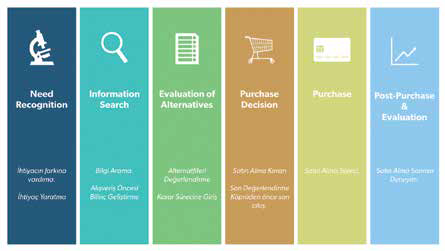
As of 2019, any object we interact with, from the watches on our arms to the refrigerators in our kitchens, has become able to access the internet. As a result, the ratio of e-commerce to the overall commerce is increasing daily. Analyzing the concept of “consumer”, which is perhaps the most important element of e-commerce, and improving the “online purchasing processes” are undoubtedly the main elements that will bring success in e-commerce field. In general, online purchasing processes show similar characteristics with offline, as the “human psychology” is involved. It is possible to categorize these processes mainly in six different stages:
● Recognizing need
● Research process
● Alternatives
● Making a purchase decision
● Purchasing
● Post-purchase experience
Recognizing the Need
In order for a purchase to take place, it is absolutely necessary that there is a need, or a need should be created. What product will be needed? What will be the number and continuity, and how can this need be met in the easiest way? Being able to answer all of these questions is considered the first stage of winning consumers online.
Research Process
After determining their needs, consumers go in search of resources with which they can meet these needs. Today, the source from which the consumers can obtain useful information in the fastest, most accurate and most efficient way is undoubtedly “Internet”. It is precisely at this point that online platforms are able to deliver the right information to the right consumer, which is made possible by digital marketing activities.
Alternatives
At this stage, it is most likely that the purchase will take place, but it is still unclear where, that is, on which platform it will take place. At this point, consumers are looking for an alternative that can meet their needs in the most appropriate way. Online shopping platforms should explain their products in the best way to consumers who have come to this stage. Descriptions, images, user comments, etc. are the elements that have a positive impact on online purchasing decisions.
One of the most efficient ways to increase the percentage of e-commerce lead conversion is
to analyze the users’ “purchasing journeys” correctly.
Making a Purchase Decision
Even if consumers determine the product that suits them, they are not considered to have purchased it yet. The percentage of users who end their session without buying anything after adding products to their shopping carts is quite high. One of the most efficient ways to increase the percentage of e-commerce lead conversion is to analyze the users’ “purchasing journeys” correctly.
Purchasing and Payment
Online users who have reached the final stage may “give up” before paying stage. The most important criterion here is to be able to meet the customer’s expectations completely and not to leave them in a situation that they did not expect at all. For example, a user who had no information about an additional shipping fee until the purchasing stage will most likely give up on their purchase decision if they encounter such an additional fee at the last point.
Post-Purchase Experience
This can also be considered as “after-sales communication and support”. Ensuring that a consumer who is attracted to the site with huge efforts purchase something again afterwards is a factor that not only reduces customer acquisition costs per conversion but also leads to customer loyalty.
