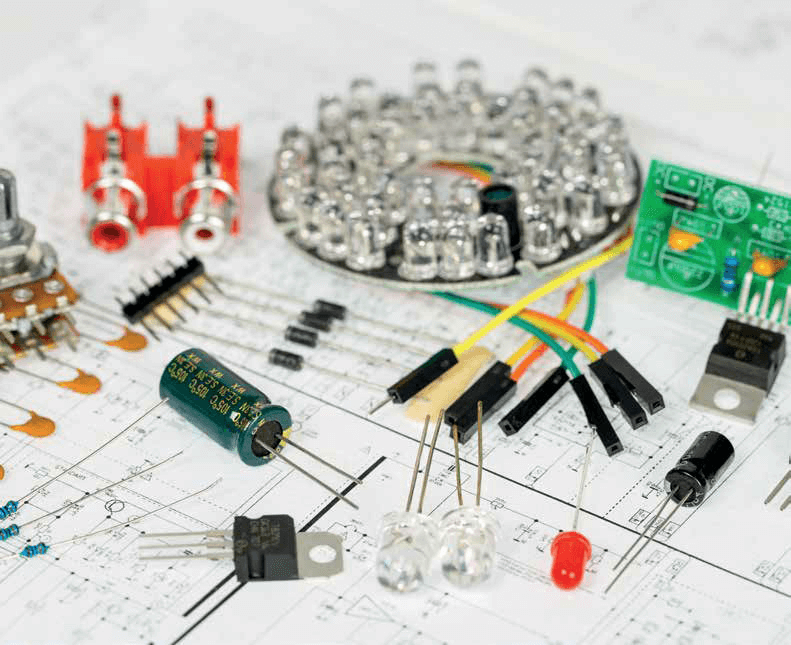
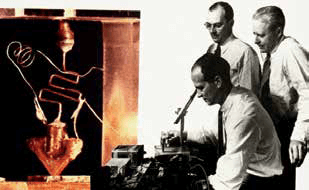
Transistors are semiconductor components consisting of at least 3 terminals. They are considered the building blocks of modern electronic devices. MCUs are the elements that physically perform the action that the codes being executed within the processors are expected to perform. The number of transistors used in today’s circuits can range from a few to billions. If we want to look at the historical development of transistors, we need to go back to 1920s. The invention of the transistors is undoubtedly a milestone in the development of electronic devices. This invention was achieved in 1947 at Bell Research Laboratories, by a team comprising of John Bardeen and Walter Brattain, headed by William Shockley.
The invention of the transistors is undoubtedly a milestone in the development of electronic devices.
Areas of Use
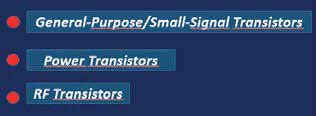
Transistors are preferred as the most convenient solution for many applications in electronics. We can divide the transistors into three main groups in terms of their fields of application. These are;
● General-Purpose/Small-Signal Transistors
● Power Transistors
● RF Transistors
In short, transistors ensure switching of larger or equivalent signals using small signals. As a simple example, we can turn on and off a 12V motor by triggering the transistor with a 3V signal coming out of the I/O port of a processor.

In addition to this switching example (switching application), we can see the transistors in various other areas of use, such as amplifier circuits, power electronics and RF applications.
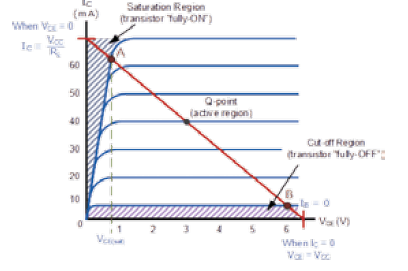
The graph shows the working zones of a BJT. These are the saturation zone, active zone and cut-off zone. If we are going to use a BJT in a switching application, the zones where the transistor should work should be the saturation zone and the cut-off zone. Otherwise, our transistor may reach high temperatures and we will have to use a cooler. On the other hand, if we are going to use a BJT as an amplifier in an amplifier circuit, the zone where the transistor should work is the active region. In order for amplification to occur optimally, the output gain should not change depending on the input. The most suitable point for this is called the Q point, which is inside the active zone. Q point is also the intersection point of AC and DC load line and is located on the load line. (Since the transistor works in the active zone, a high degree of heat is released. Therefore, the amplifier circuits are stored in large aluminum coolers for cooling purposes.)
BJT (Bipolar Junction Transistor)
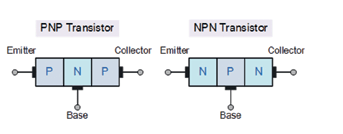
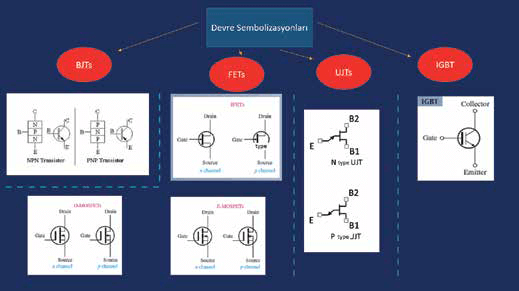
They are divided into 2 types as NPN and PNP. The reason why they are called so is the order of the materials used in them. They are a transistor type commonly used in amplifier circuits. They have a 3-pin structure. (Base-Emitter- Collector). The amount of current between the Collector and the Emitter is adjusted based on the current value from the base pin. BJTs consume a lot of energy as they work with “current triggering” due to their structure. Therefore, they are not preferred in applications where power consumption is critical.

UJT (Unijunction Transistor)
It is a type of transistor that is usually used for periodic triggers. (For example; oscillator circuit) They are produced in 2 types as “N” and “P”. They have a 3-pin structure. They generate the clock pulses necessary for triggering in thyristor and triac circuits. Current flow is ensured between the bases B1-B2 with the voltage applied to the emitter. They are used for manufacturing loose oscillator circuits.
Should we classify transistors?
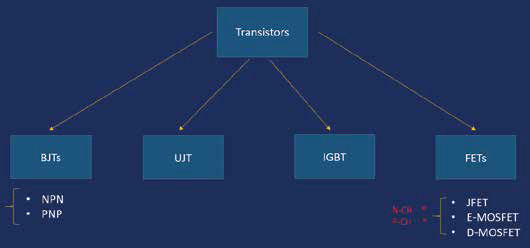
It is not so easy to classify transistors that achieve great things in terms of the work they do. I want to talk about the most commonly used types of these “tiny building blocks” of electronics in current applications, which actually have very specific types in industrial, automotive and space applications.
Circuit Symbolizations
IGBT (Insulated Gate Bipolar Transistor)
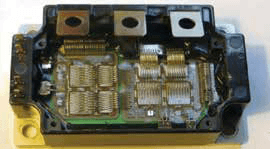
They are preferred as they behave more stably in high voltage applications. They have a 3-pin structure. (Gate-Collector-Emitter). Like MOSFETs, they are controlled by voltage from the Gate pin. However, the output characteristics are like those of BJTs. In other words, they feature half MOSFET half BJT properties. Their physical structure is generally much larger and non-standard compared to other Mosfets, but small-sized ones are also available.
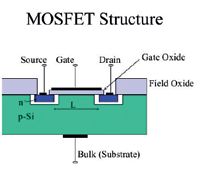
FETs ( Field Effect Transistors)
FETs, (field effect transistors) work with voltage triggering, as the name suggests. They have a 3-pin structure. (Gate-Drain-Source) Basically, the current permeability between the Drain and the Source is adjusted based on the voltage applied to the Gate pin. FETs are preferred in switching applications as they are more linear and stable. There are 3 basic types as JFET, E-MOSFET and D-MOSFET. There are 2 different structures of each type, namely “N-Channel” and “P-Channel”. JFETs are similar to BJT in other aspects, except for the triggering method. D-MOSFETs (Depletion) are the Mosfets where the current permeability between the Drain and the Source decreases as the magnitude of the voltage applied to the Gate increases. E-MOSFETs (Enhancement), on the other hand, are the Mosfets where the current permeability between the Drain and the Source increases as the magnitude of the voltage applied to the Gate increases as well. The MOSFET type we use in switching applications is the “Enhancement” type. FETs are the preferred transistor type in applications where power consumption is critical, as they are triggered by voltage.
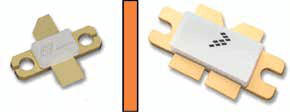
(RF Transistors with Special Sheath)
Ozdisan Elektronik guarantees quality while offering a wide product range to its customers, with its distributorship agreements that it has made with the leading companies in the production of semiconductor products. The semiconductor component manufacturing companies, which Ozdisan Elektronik is the distributor of are;